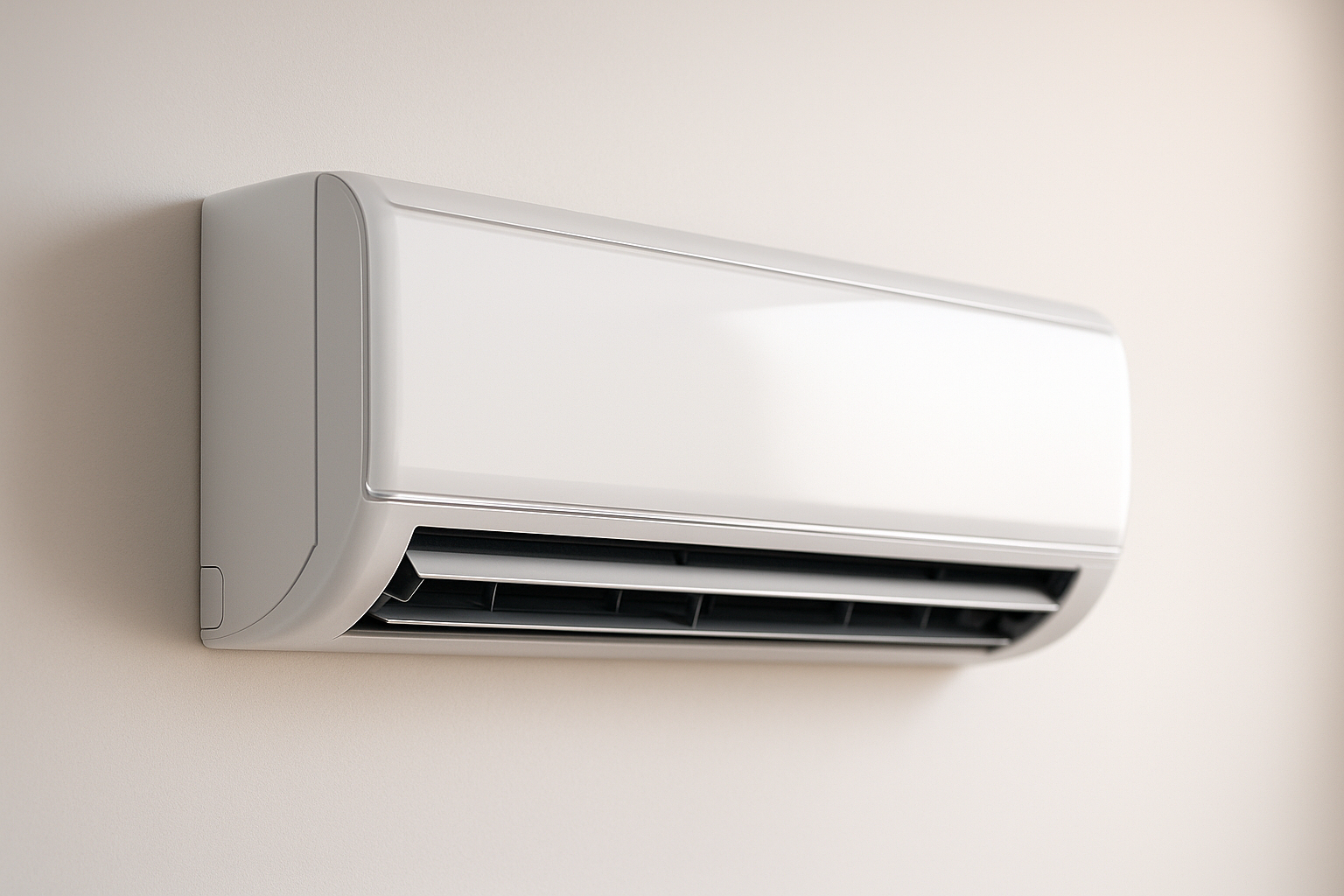
Looking for the most efficient air conditioner in Australia and wondering how to choose the right one for your home, budget, and climate?
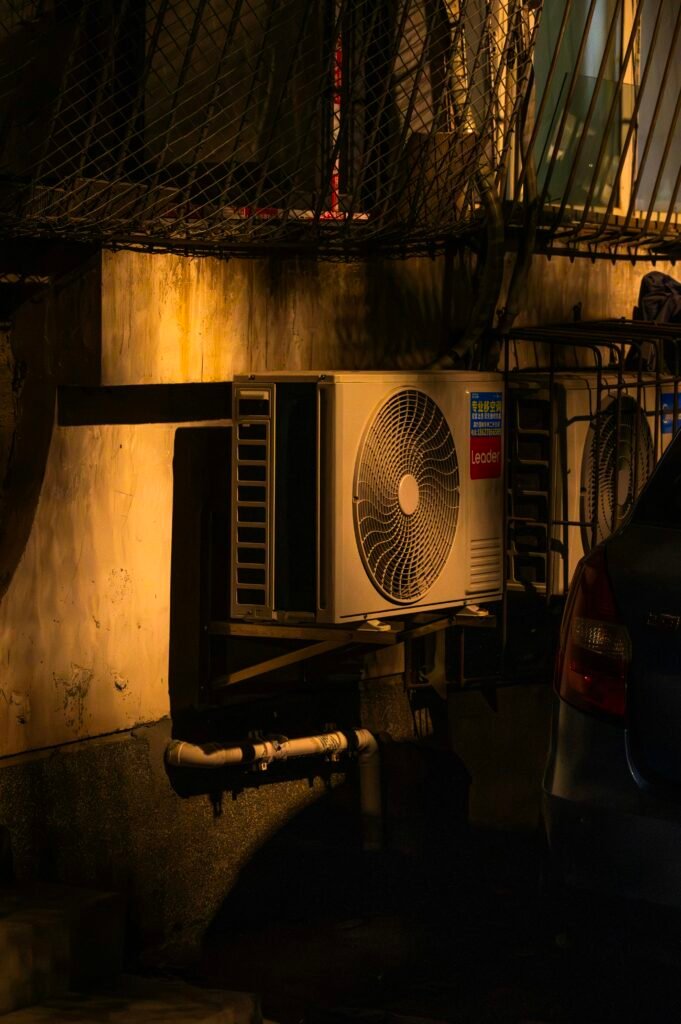
Most Efficient Air Conditioner Australia Guide
This guide helps you understand efficiency ratings, system types, sizing, running costs, installation tips, and top models available in Australia. You’ll get practical advice so you can make an informed decision and keep your cooling costs down while maintaining comfort.
Why efficiency matters for your air conditioner
Efficiency directly affects how much you pay to run your air conditioner and how comfortable your space feels. Choosing a more efficient model typically reduces electricity bills, lowers environmental impact, and delivers more consistent temperature control.
You’ll benefit from understanding efficiency metrics and how they translate into real-world savings, especially with Australia’s diverse climates and electricity prices.
Key efficiency metrics you need to know
Understanding the numbers on energy labels helps you compare units fairly. Energy rating stars, SEER, EER, HSPF, and COP are common metrics you’ll encounter when shopping for an air conditioner.
These metrics can be confusing at first, but once you know what each one means, you’ll be able to match a unit to your needs and estimate running costs more accurately.
Energy Rating Stars (Australian Energy Rating Label)
The star rating on an Australian Energy Rating label summarizes efficiency for consumers, primarily for cooling. The more stars, the more efficient the unit is compared to others of the same capacity.
You’ll see the label on air conditioners sold in Australia; it often includes estimated annual running costs for average use and an energy consumption figure.
SEER, EER, HSPF, COP — what they mean
SEER (Seasonal Energy Efficiency Ratio) measures cooling efficiency over a season; higher is better. EER (Energy Efficiency Ratio) measures peak performance at specific conditions. HSPF (Heating Seasonal Performance Factor) applies to heat pump systems for heating. COP (Coefficient of Performance) is the ratio of heating or cooling provided to electrical energy consumed.
You should prioritize SEER and EER for cooling performance. If you live somewhere you’ll also use heating frequently, look at HSPF and COP for heating efficiency.
Inverter technology and part-load efficiency
Inverter-driven compressors vary speed to match demand rather than turning on and off at full capacity. This significantly improves part-load efficiency and temperature control.
You’ll save more in real life with an inverter model because most operations are at partial load rather than full capacity.
Types of air conditioning systems and their efficiencies
Choosing the right system type is as important as choosing the most efficient model. System selection depends on your home layout, budget, and how many rooms you need to control.
Below is a table summarizing common system types and their typical efficiency and suitability.
| System Type | Typical Efficiency | Best for | Notes |
|---|---|---|---|
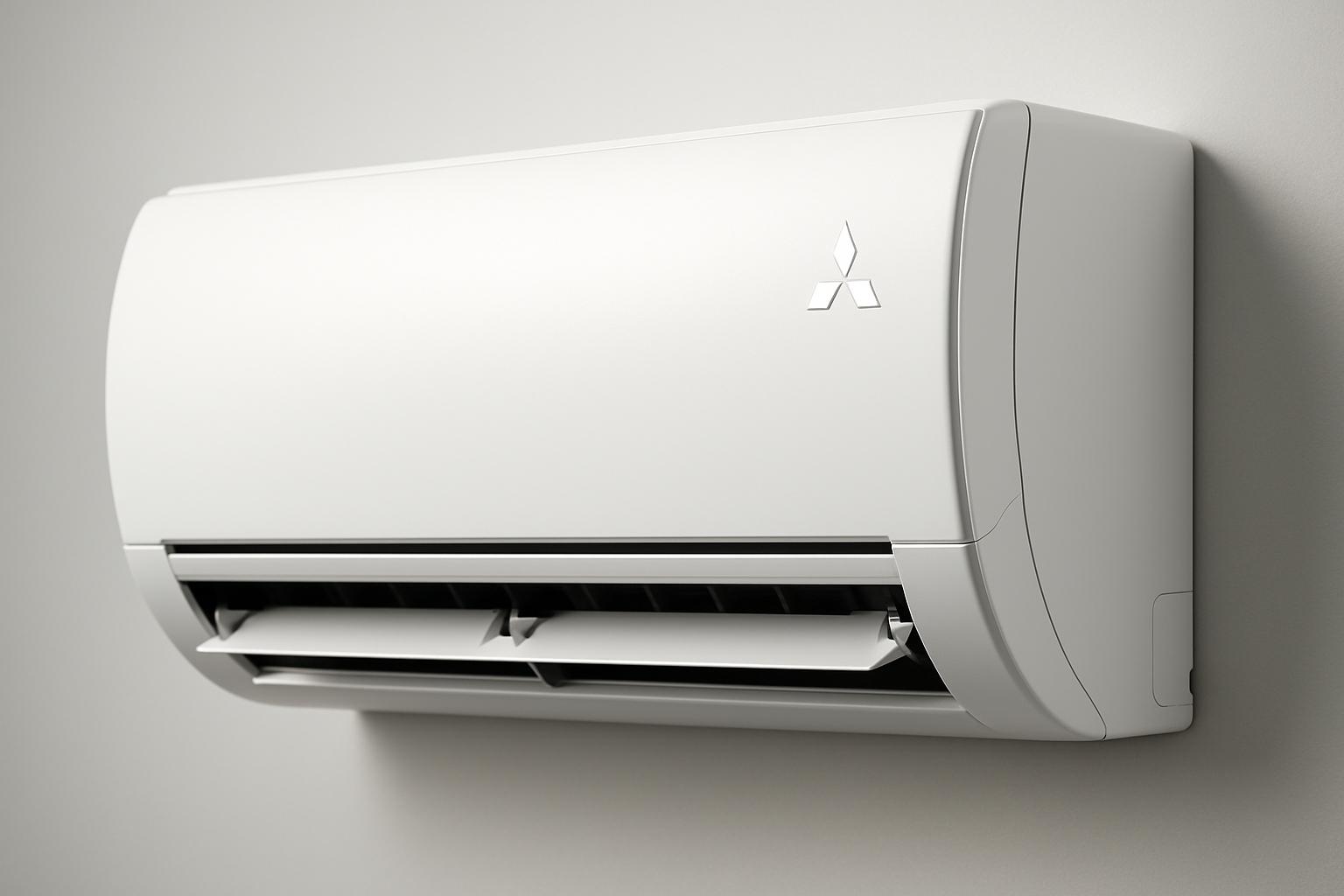
| Split system (single head) | High (especially with inverter) | Single rooms or open-plan areas | Most common choice for Australian homes. Efficient and relatively low cost. |
| Multi-split system | High | Multiple rooms without ducts | Saves space, flexible zoning, higher upfront cost. |
| Ducted reverse-cycle | Moderate to high | Whole-house heating and cooling | Better for consistent whole-house comfort, installation costs higher. |
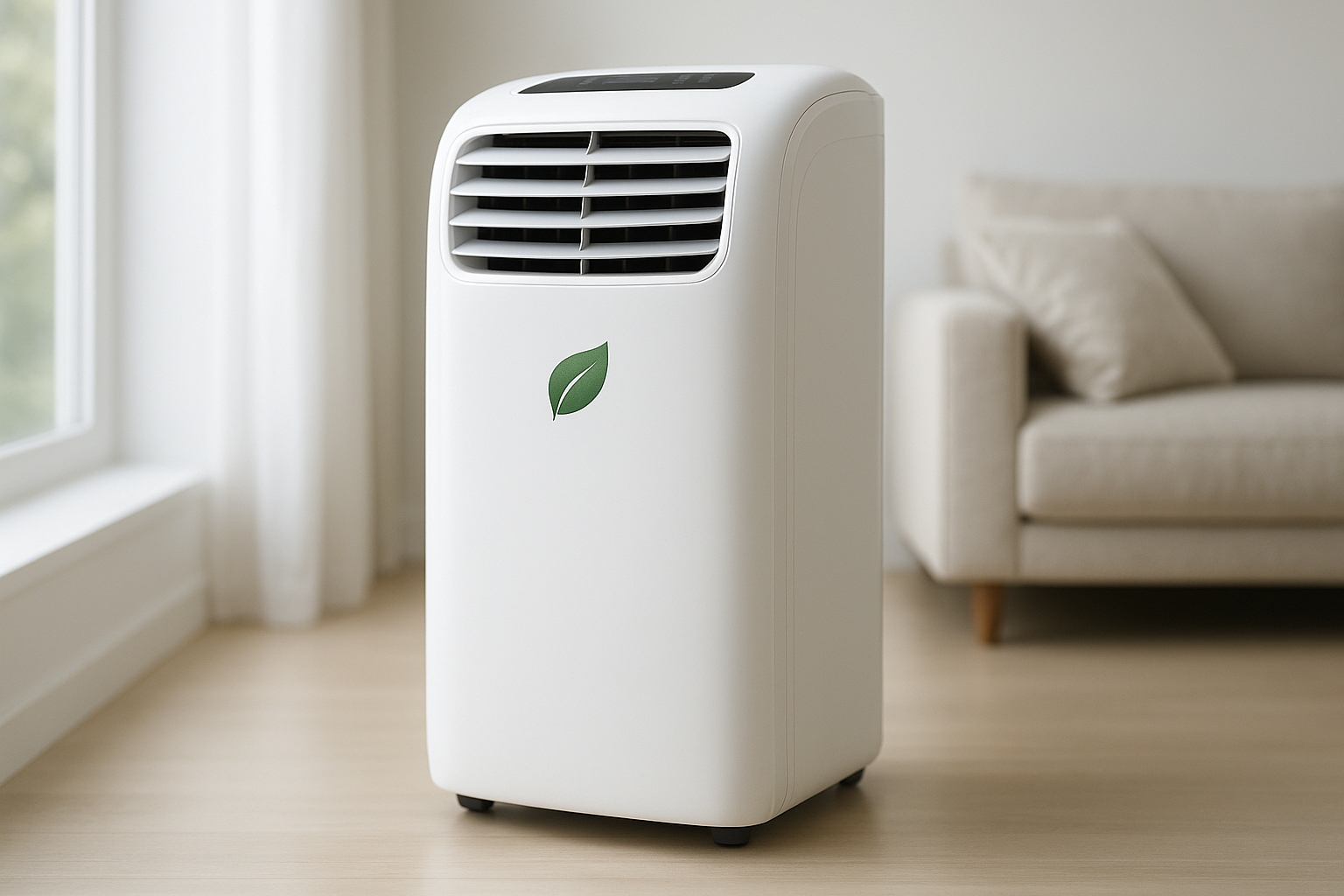
| Portable/Window units | Low to moderate | Temporary or small spaces | Lower efficiency, less durable, cheaper upfront. |
| Evaporative cooler | Very high (water-based cooling) | Low-humidity climates (northern & inland Australia) | Low running cost where suitable, not ideal for humid areas. |
| Reverse-cycle heat pump | High | Homes needing both heating and cooling | Efficient for year-round use, look at HSPF and COP ratings. |
You’ll want an inverter split or multi-split for most modern Australian homes because they combine high efficiency with good comfort control.
Refrigerants and environmental impact
Different refrigerants affect global warming potential (GWP) and efficiency. Newer refrigerants like R32 and low-GWP blends are becoming more common because they balance performance with lower environmental impact.
You’ll want to choose units using lower-GWP refrigerants where possible and consider future regulations and availability for servicing.
Common refrigerants in Australia
R32: Lower GWP compared with older R410A, good for efficiency.
R410A: Was common but has higher GWP and is being phased down in some markets.
R290 (propane): Very low GWP and high efficiency in some small systems, but handling regulations apply.
You should check which refrigerant a model uses and whether local technicians are experienced with it.
Sizing your air conditioner correctly
Sizing is one of the most important factors for efficiency and comfort. An oversized unit cycles on and off, wasting energy and reducing comfort. An undersized unit runs constantly and fails to reach the desired temperature.
You’ll need a proper load calculation that accounts for room size, ceiling height, insulation, sunlight, window area, occupancy, and appliance heat gain.
Simple capacity guidelines
Use these general rules only as a starting point; get a professional sizing if you can.
- Small bedroom (10–15 m²): 2.5–3.5 kW cooling capacity
- Medium room (15–25 m²): 3.5–5.0 kW
- Large open-plan living (25–40 m²): 5.0–8.0 kW
- Whole-house ducted systems: sized by combined load, usually 10–20+ kW depending on house size
You’ll benefit from a qualified installer performing a Manual J or equivalent load calculation for accuracy.
Zoning for efficiency
Zoning lets you cool only occupied areas, which reduces running hours and energy use. Split systems and multi-split systems are naturally suitable for zoning, while ducted systems can be zoned with motorised ducts and separate thermostats.
You’ll save more when you avoid conditioning unoccupied rooms and use timers and smart controls.
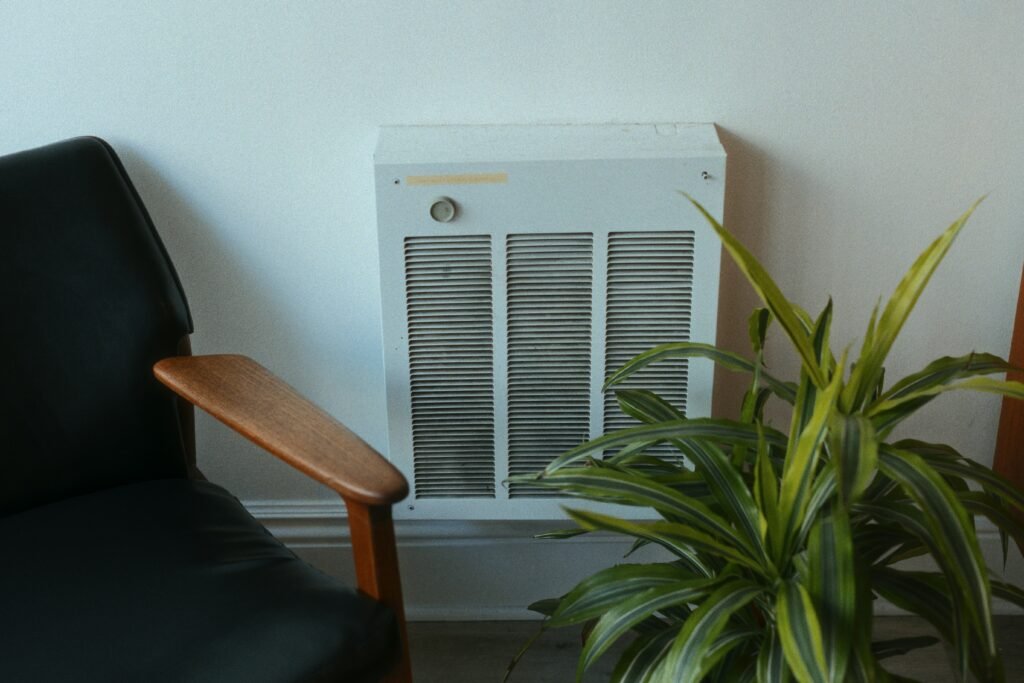
Running costs: how to estimate what you’ll pay
Running costs depend on unit efficiency, local electricity prices, capacity, and how many hours you run the system. Using energy rating labels and SEER/EER values, you can estimate energy consumption and cost.
Below is a simplified table to help you estimate annual running costs based on energy rating and typical usage. These numbers are illustrative; adjust based on your local electricity rate and hours of operation.
| Unit Efficiency (Stars / SEER) | Typical kWh per hour (cooling) | Daily hours (example) | Approx. daily cost (AUD, 0.35 AUD/kWh) | Estimated annual cost (90 days summer) |
|---|---|---|---|---|
| High efficiency (5+ stars / SEER 6+) | 0.8–1.2 kW | 8 hours | $2.80–$3.36 | $252–$302 |
| Mid efficiency (3–4 stars / SEER 4–5) | 1.2–1.8 kW | 8 hours | $3.36–$5.04 | $302–$454 |
| Low efficiency (1–2 stars / SEER <4)< />d> | 1.8–2.5 kW | 8 hours | $5.04–$7.00 | $454–$630 |
You’ll notice real-world costs vary a lot based on usage patterns. Using timers, eco modes, and setting temperatures sensibly will reduce these figures.
Top brand considerations for Australia
Australia has a mix of international and local brands that are popular and well-supported. Brand choice should factor in warranty, availability of local service, energy ratings, and cost.
You’ll want to choose a brand with a strong local service network and a good warranty to ensure longevity and efficient operation.
Popular brands and what they offer
- Mitsubishi Electric: Known for reliability and efficiency, strong inverter technology.
- Daikin: Strong engineering, good heat pump models and energy performance.
- Fujitsu: Good value and efficient split systems.
- LG & Samsung: Competitive features and smart controls, good inverter tech.
- ActronAir & Braemar: Australian-focused brands with models for local conditions.
- Panasonic: Reliable with strong efficiency and air purification features.
You should compare energy rating labels and warranty conditions rather than relying on brand alone.
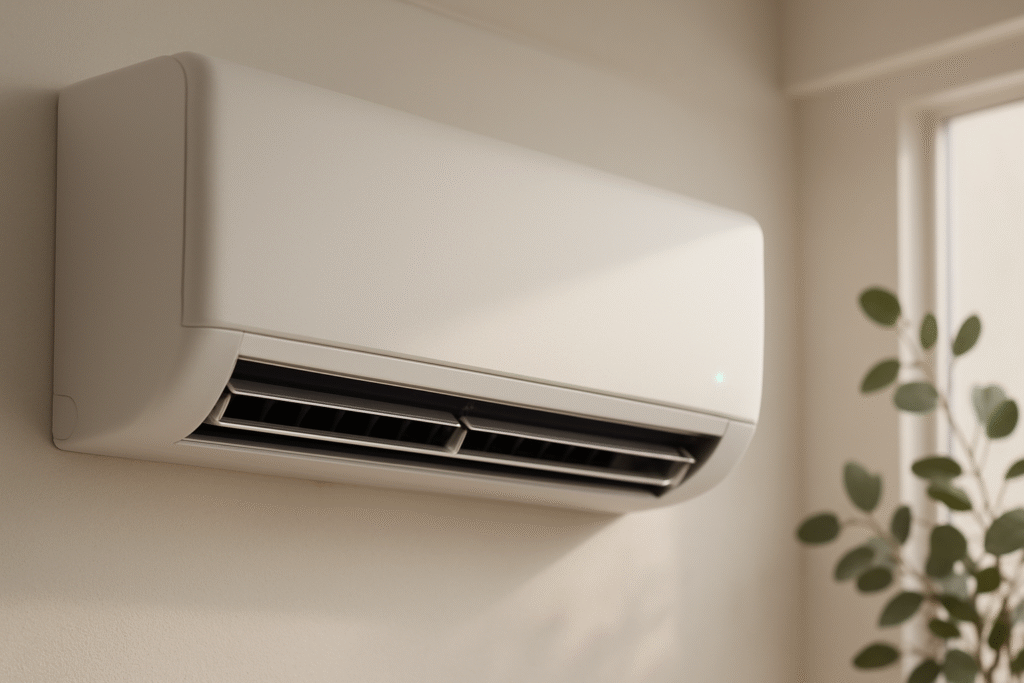
Recommended models and comparisons
Below is a sample comparison table of representative contemporary models you might find in Australia. Note: specifications and prices change frequently; use this as a starting reference and verify current data before purchasing.
| Brand & Model | Type | Cooling Capacity (kW) | Star Rating (cooling) | Inverter | Approx. Price (AUD) |
|---|---|---|---|---|---|
| Mitsubishi Electric MSZ-GL | Split | 2.5–7.1 | 4–5 | Yes | $1,200–$3,500 |
| Daikin FTXS | Split | 2.5–7.1 | 4–5 | Yes | $1,200–$3,600 |
| Fujitsu ASTG | Split | 2.5–6.8 | 4–5 | Yes | $1,100–$3,200 |
| LG Dual Inverter | Split | 2.5–7.0 | 4–5 | Yes | $1,000–$3,200 |
| ActronAir 3.5kW | Split | 3.5 | 3–4 | Yes | $900–$2,200 |
| Ducted (generic) | Ducted | 8–16+ | 3–5 | Yes | $6,000–$12,000 installed |
You’ll need to check current model availability as manufacturers update product lines frequently.
Installation matters as much as the unit
Even the most efficient unit will perform poorly if installed incorrectly. Proper sizing, correct refrigerant charge, correct refrigerant piping, and optimal placement of indoor and outdoor units are essential.
You’ll reduce energy waste and noise problems by using a licensed installer who follows manufacturer guidelines and offers a workmanship warranty.
Placement and airflow tips
Place the outdoor unit where airflow is clear and it’s protected from direct sun and debris. The indoor unit should be positioned for even airflow without obstructions, avoiding direct sunlight on the thermostat.
You’ll also want to ensure adequate clearance for maintenance access and minimal pipe runs for efficiency.
Importance of ductwork (for ducted systems)
Well-insulated, sealed ducts minimise losses and improve efficiency. Poorly designed or leaky ducts can reduce system efficiency by 20–40%.
You’ll demand high-quality duct installation and future-proof insulation when choosing a ducted system.
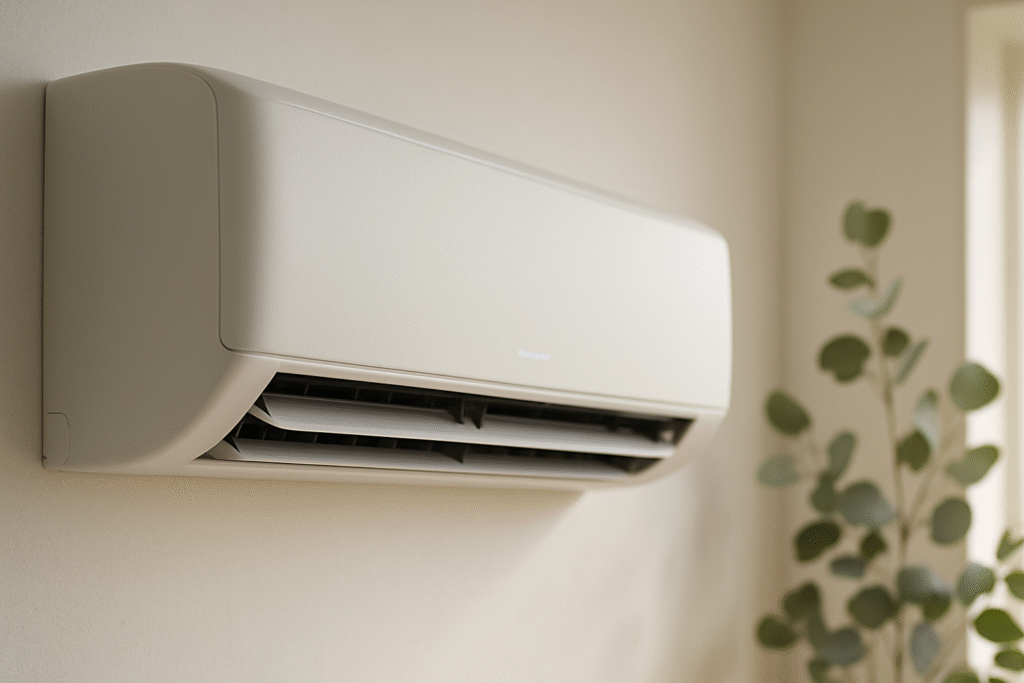
Maintenance checklist to keep efficiency high
Routine maintenance keeps your air conditioner operating efficiently and extends its life. Filters, coils, drainage, and outdoor unit clearance all matter.
You’ll benefit from both regular DIY checks and professional servicing annually.
DIY tasks you can do
- Clean or replace filters monthly during heavy use.
- Keep indoor and outdoor units free of dust and obstructions.
- Check condensate drain for blockages.
- Inspect visible refrigerant lines and insulation for damage.
You’ll save operating costs and avoid breakdowns with simple, regular attention.
Professional servicing recommendations
Book a professional service at least once per year to check refrigerant levels, electrical connections, coil condition, and overall system performance. If your system has high usage or is older, consider twice-yearly checks.
You’ll catch small issues early and maintain peak efficiency with professional servicing.
Energy-saving habits and smart controls
How you use your air conditioner influences efficiency as much as the unit you choose. Smart thermostats, timers, and sensible temperature settings reduce energy use.
You’ll save by setting reasonable temperature targets (e.g., 24–25°C when cooling) and using eco or energy-saving modes where available.
Smart thermostat and automation tips
Smart thermostats can learn your schedule and optimise runtime. Geo-fencing and occupancy sensors can reduce unnecessary operation when your home is empty.
You’ll pair a smart control with zoning to avoid conditioning unused spaces and to schedule temperature setbacks.
Simple behaviour changes that help
Close blinds and curtains to minimise solar gain, use ceiling fans to improve comfort at higher thermostat settings, and seal windows and doors to reduce infiltration.
You’ll find that combining these strategies reduces cooling loads and overall running time.
Rebates, incentives, and regulations in Australia
You may find state or territory programs, manufacturer offers, or retailer discounts that reduce the upfront cost. Efficiency standards and labeling are regulated nationally, and some utilities offer demand management incentives.
You’ll want to check current incentives in your state and the Energy Rating label for eligibility for certain rebates.
What to check before buying
- Current Australian energy rating label and stars.
- Manufacturer warranty and service network in your area.
- Eligibility for any local government or utility rebates.
- Installer accreditation and compliance certificates.
You’ll make a more cost-effective purchase by combining incentives, efficient equipment, and quality installation.
Choosing between cooling-only and reverse-cycle heat pumps
If you need heating in cooler seasons, a reverse-cycle heat pump provides efficient year-round comfort. Heat pumps are generally cheaper to operate for heating than resistive electric heaters.
You’ll often recover the extra upfront cost of a heat pump through energy savings during winter if you use the heating function regularly.
When cooling-only is enough
If you only need air conditioning during summer months and have an alternate heating source that you prefer, a cooling-only split might be cheaper initially.
You’ll evaluate your annual heating needs and the cost of installing separate heating before choosing cooling-only.
Common mistakes to avoid
Avoid oversizing, ignoring installation quality, choosing the cheapest unit without checking ratings, and neglecting maintenance. Each of these mistakes can negate the benefits of an efficient system.
You’ll reduce future regret by prioritising correct sizing, professional installation, and consistent maintenance.
Installation pitfalls to watch for
Watch for installers who lock you into a single brand, omit detailed load calculations, or quote without inspecting your home. Always ask for references and proof of licencing.
You’ll want to compare multiple quotes and ensure the installer provides a clear breakdown of costs and installation scope.
Frequently asked questions (FAQs)
You’ll likely have questions when researching or shopping. This section answers common concerns so you can move forward with confidence.
How many stars should I aim for?
Aim for the highest practical star rating within your budget. Models with 4–5 stars or high SEER values offer the best balance of efficiency and value for most homeowners.
You’ll weigh upfront cost against long-term savings; higher-rated units usually pay back through lower running bills.
Is an inverter system worth the extra cost?
Yes. Inverter systems provide better part-load efficiency, quieter operation, and longer compressor life. The extra upfront cost is often recovered through lower electricity bills over the life of the unit.
You’ll notice improved comfort because an inverter system maintains temperature more steadily.
How long does an air conditioner last?
With proper maintenance, split systems typically last 10–15 years or longer. Ducted systems may last longer but require more maintenance.
You’ll maximise lifespan through annual servicing and prompt repairs when issues arise.
Can an air conditioner be energy-efficient in a poorly insulated home?
Efficiency helps, but poor insulation increases the load on any system. Improving insulation, sealing gaps, and shading windows offer big efficiency gains and reduce the required capacity of your air conditioner.
You’ll get better comfort and lower running costs if you treat your home as a system, not just the air conditioner.
Checklist for your purchase decision
This checklist helps you compare options when shopping.
- Calculate accurate load requirements or get a professional assessment.
- Compare energy rating labels and SEER/EER values.
- Choose an inverter model where possible.
- Confirm refrigerant type and local technician support.
- Ask about full installation costs and warranty specifics.
- Consider zoning and smart control options.
- Check for rebates and incentives.
- Get multiple installation quotes and check installer credentials.
You’ll avoid common pitfalls and pick a system tailored to your needs by following this checklist.
Final thoughts and next steps
Choosing the most efficient air conditioner in Australia means balancing energy ratings, correct sizing, installation quality, and how you’ll actually use the system. Efficiency reduces running costs and environmental impact, but only if the system is installed and maintained correctly.
You should get a professional assessment, compare several high-efficiency inverter models, consider long-term costs over upfront price, and adopt energy-saving habits to get the best value from your purchase.
If you’d like, tell me your home size, number of rooms, and climate zone, and I can help narrow down suitable capacities and models for your situation.