

?Have you ever wondered exactly how central air conditioning keeps your entire home comfortable while running mostly out of sight?
Understanding Central Air Conditioning and How It Works
Central air conditioning is the system that cools and often dehumidifies the air in your whole home from a central location. You’ll see it referenced as a split system (with an outdoor unit and an indoor air handler) or a packaged system (all components in one cabinet). This article explains the components, the refrigeration cycle, types, sizing, maintenance, troubleshooting, energy considerations, and how to choose the right system for your needs.
Why central air matters to you
When temperatures rise, central air conditioning becomes a core comfort system for your family and for protecting belongings that are sensitive to heat and humidity. Understanding how it works helps you make better decisions about maintenance, energy savings, troubleshooting, and replacement.
Basic principles: The refrigeration cycle
The refrigeration cycle is the fundamental principle behind any central air conditioning system. You’ll find the same four basic steps repeated across different system designs.
Four main steps of the refrigeration cycle
- Compression: The refrigerant is compressed, raising its pressure and temperature. This happens in the compressor, typically located in the outdoor unit.
- Condensation: The hot, pressurized refrigerant releases heat and condenses into a liquid in the condenser coil, again usually outdoors.
- Expansion: The liquid refrigerant passes through an expansion device that lowers its pressure and temperature.
- Evaporation: The cold, low-pressure refrigerant absorbs heat from indoor air in the evaporator coil, cooling and often dehumidifying the air that passes over it.
Each step is part of a continuous loop. As you control your thermostat, the system cycles the compressor on and off to maintain the set temperature.
The role of refrigerant
Refrigerant is the working fluid that carries heat from inside your home to the outside. Different refrigerants have been used over time for reasons related to efficiency and environmental impact. You should know what refrigerant your system uses because that affects service, repair, and disposal.
Main components of a central air conditioning system
A central air conditioning system includes distinct components, each with a clear function. Knowing each component helps you understand potential problems and maintenance needs.
Outdoor unit (condenser/compressor)
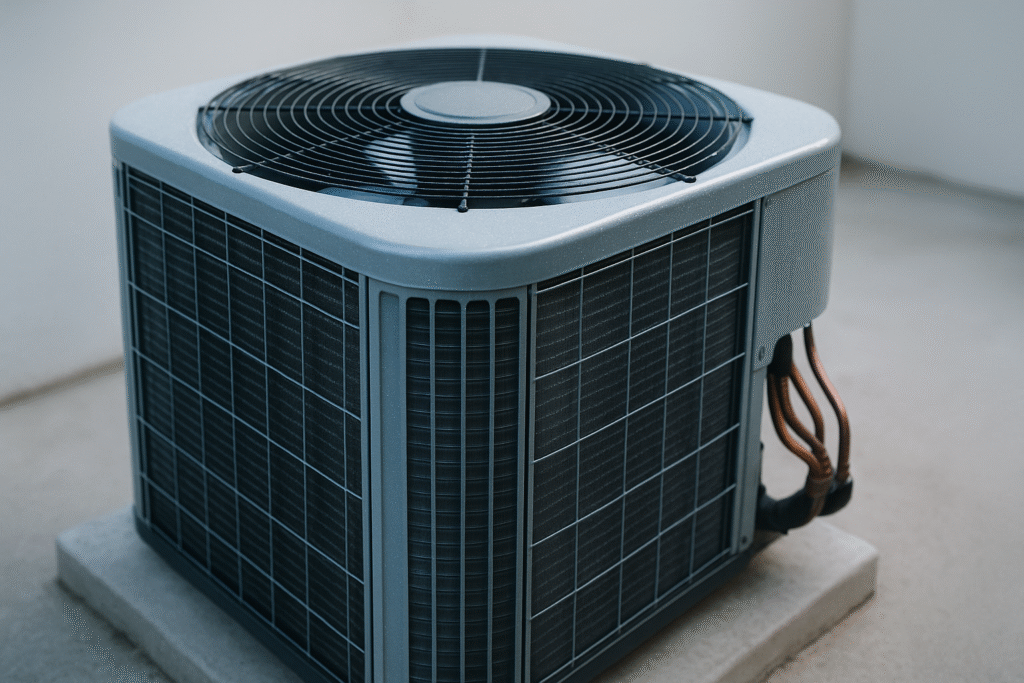
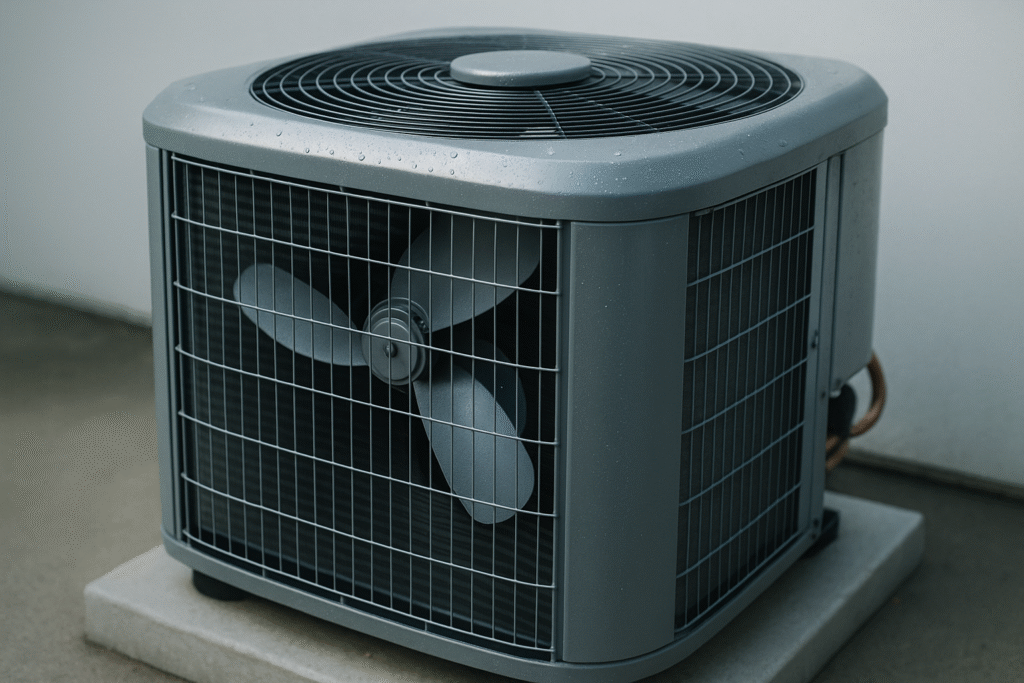
Your outdoor unit contains the compressor and the condenser coil, along with a fan to reject heat to the outdoors. The compressor pressurizes the refrigerant and moves it through the system. The condenser removes heat from the refrigerant so it can turn back into a liquid.
Indoor unit (evaporator/air handler)
The indoor unit contains the evaporator coil and an air handler or furnace blower. Air from your home passes over the evaporator coil, where refrigerant absorbs heat. The cooled air is blown through the ductwork and returned to living spaces.
Expansion device (TXV or orifice)
The expansion device—either a thermostatic expansion valve (TXV) or a fixed orifice—controls refrigerant flow into the evaporator coil. It reduces the refrigerant pressure and temperature so the refrigerant can absorb heat inside your home.
Ductwork and registers
Ducts distribute conditioned air and return warm air to the system. Leaky, poorly insulated, or improperly sized ducts reduce efficiency and comfort. Registers and grilles control airflow into rooms.
Thermostat and controls
Your thermostat senses indoor temperature and signals the system to start or stop cooling. Modern thermostats can be programmable or smart models that help you optimize energy use and comfort.
Air filters and indoor air quality components
Air filters protect the evaporator coil and improve indoor air quality by capturing dust and particulates. Higher-efficiency filters capture finer particles but can restrict airflow if not matched to the blower’s capabilities. Some systems also include UV lights, humidifiers, or electronic air cleaners.
How the system cools your home step-by-step
Here’s a simple step-by-step of what happens from the moment you lower your thermostat setting to when cool air arrives in a room.
Step 1: Thermostat calls for cooling
When you lower your thermostat below the current indoor temperature, it sends a signal to start the cooling cycle. The control board engages the air handler and, shortly after, the outdoor unit’s compressor.
Step 2: Compressor pressurizes refrigerant
The compressor raises the pressure and temperature of the refrigerant gas. The high-pressure gas then moves to the condenser coil.
Step 3: Condenser rejects heat
The condenser fan draws outside air over the condenser coil, which allows the high-pressure refrigerant to release heat and condense into a high-pressure liquid.
Step 4: Expansion device cools refrigerant
The high-pressure liquid refrigerant flows through the expansion device, where it drops in pressure and temperature and becomes a cold liquid/vapor mix.
Step 5: Evaporator absorbs heat and cools air
Warm indoor air is pushed over the evaporator coil by the air handler. The cold refrigerant inside the coil absorbs heat from the air, evaporates, and returns to the compressor as a low-pressure gas. The cooled and dehumidified air then flows through your ducts.
Step 6: Cycle repeats
This continuous loop runs until the thermostat reaches the set temperature, at which point the compressor cycles off. The blower may continue briefly to circulate air and equalize room temperatures.
Types of central air systems
Central systems come in several common configurations. Each has advantages and limitations that affect your choice based on home layout, climate, and budget.
Split systems
Split systems have an outdoor unit (compressor/condenser) and an indoor air handler (evaporator coil and blower). This configuration is the most common in detached homes. Split systems are efficient and flexible—your furnace and air conditioner can share ducts and controls.
Packaged systems
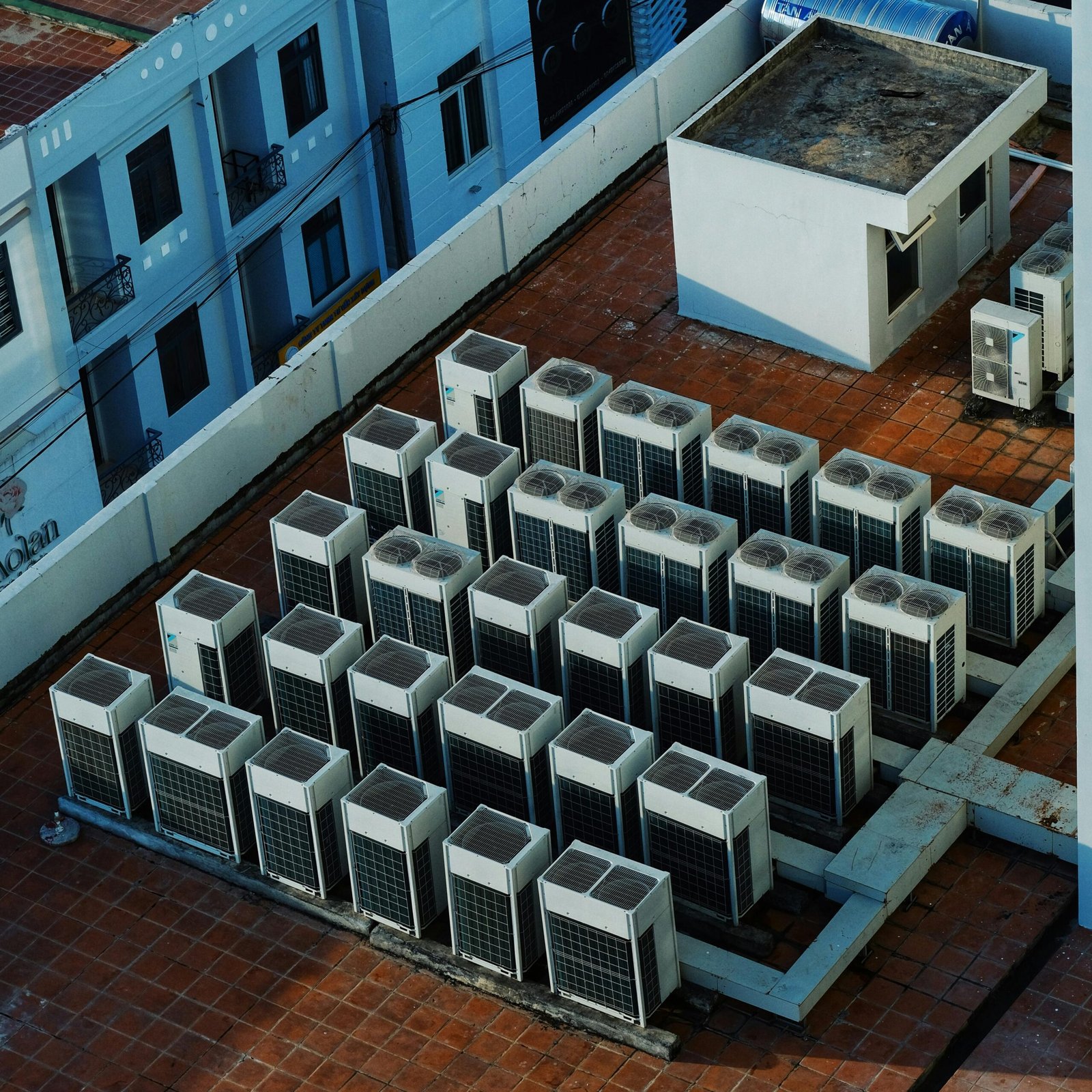
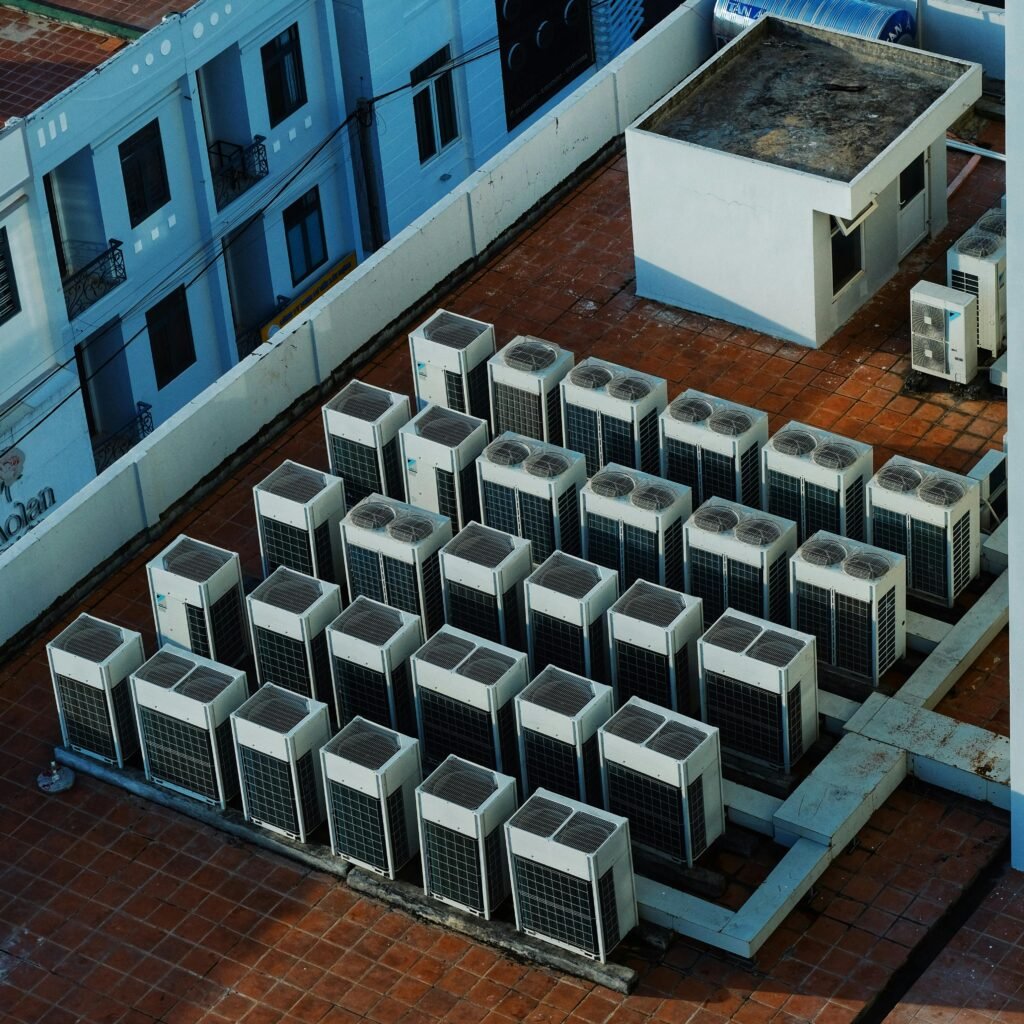
Packaged systems house all components in one outdoor cabinet, often used for homes without space for indoor air handlers or for rooftop installation in commercial buildings. Packaged units can be gas/electric combos for heating and cooling.
Heat pumps
Heat pumps are both cooling and heating systems in one package. They work like an air conditioner in summer (moving heat outdoors) and reverse the refrigeration cycle in winter to move heat indoors. In mild climates, heat pumps are very efficient for year-round comfort.
Zoned systems
Zoned systems divide your home into areas with independent temperature control using multiple thermostats and dampers in the ductwork. Zoning improves comfort and can save energy by conditioning only occupied areas.
Table: Comparison of common central AC types
| System type | Best for | Pros | Cons |
|---|---|---|---|
| Split system | Most single-family homes | Efficient, flexible, widely available | Requires indoor space for air handler |
| Packaged unit | Small homes, rooftop installations | Compact, all-in-one | Less efficient options, outdoor-only unit |
| Heat pump | Mild climates, energy efficiency | Heating and cooling in one, high efficiency | Less effective in extremely cold climates unless cold-climate model |
| Zoned system | Homes with varying load or occupancy | Improved comfort, potential energy savings | Higher upfront cost, more complex controls |
Sizing and efficiency: SEER, tonnage, and load calculations
Choosing the right size and efficiency impacts comfort, energy bills, and system longevity.
What does “tonnage” mean?
Tonnage refers to an AC unit’s cooling capacity. One ton equals 12,000 BTU per hour. A properly sized system matches the cooling load of your home, which depends on square footage, insulation, windows, occupancy, and local climate.
What is SEER?
SEER stands for Seasonal Energy Efficiency Ratio. It measures cooling output divided by energy consumed over a typical season. Higher SEER means more energy efficiency. New systems often range from 14 to 26+ SEER; local codes and budgets often influence your choice.
Why professional load calculations matter
A Manual J load calculation estimates your home’s cooling needs based on many factors. You should not rely only on square footage. Oversized systems cycle too frequently, increasing wear, reducing dehumidification, and lowering comfort. Undersized systems can’t keep rooms cool during peak demand.
Installation considerations
Proper installation is as important as equipment selection for performance and longevity.
Matching indoor and outdoor components
You must match the capacities of the condenser and evaporator coil. Mismatched components can reduce efficiency and cause warranty issues. Always confirm compatibility.
Proper refrigerant charge and airflow
Technicians measure refrigerant charge and airflow during installation. Incorrect refrigerant levels or restricted airflow result in poor performance, higher bills, and premature compressor failure.
Duct design and sealing
Well-designed, sealed, and insulated ductwork ensures even distribution of conditioned air. You should have ducts tested and sealed (mastic or mechanical fasteners plus foil tape) when installing or replacing systems.
Electrical and mechanical considerations
Installation requires correct electrical wiring, disconnects, and line set routing. Grounding and proper wire gauge are necessary for safe operation. Clearances around outdoor units for airflow and service access should be observed.
Maintenance to keep your system running well
Routine maintenance extends equipment life, improves efficiency, and prevents breakdowns.
Seasonal maintenance checklist
- Replace or clean air filters every 1–3 months, depending on filter type and household conditions.
- Inspect and clean outdoor condenser coils and ensure no vegetation obstructs airflow.
- Check refrigerant levels and system pressures annually; adjust if necessary.
- Clean the evaporator coil and condensate drain to prevent clogs and mold growth.
- Lubricate blower motor bearings if applicable and ensure belts are in good condition.
- Test thermostat accuracy and operation.
- Inspect electrical connections and capacitors for signs of wear.
Table: Maintenance schedule at a glance
| Task | Frequency |
|---|---|
| Replace/clean filter | Every 1–3 months |
| Clean condenser coil | Annually |
| Check refrigerant and system pressures | Annually |
| Clean evaporator coil & drain | Annually |
| Inspect ductwork for leaks | Every 2–3 years |
| Professional tune-up | Annually or biannually |
Benefits of professional tune-ups
A professional tune-up provides more thorough inspection and calibration than do-it-yourself tasks. Technicians check refrigerant charge, measure airflow, test safety controls, and inspect electrical components. A tune-up can prevent unexpected failures during peak season.
Common problems and troubleshooting
When your system isn’t cooling as expected, a few common causes account for most issues.
No cooling or reduced cooling
Possible causes:
- Thermostat setting or wiring issues: Check that the thermostat is set to cool and the fan setting is correct.
- Tripped breaker or blown fuse: Inspect electrical panel.
- Low refrigerant charge (leak): Requires a professional leak check and recharge.
- Dirty evaporator or condenser coils: Clean coils to restore heat transfer.
- Restricted airflow due to dirty filters or closed vents: Replace filters and open vents.
Short cycling (turning on and off rapidly)
Short cycling often points to oversized equipment, low refrigerant, or overheating due to restricted airflow. Short cycling stresses the compressor.
Frozen evaporator coil
A frozen coil suggests restricted airflow or low refrigerant. Turn off cooling and run the fan to thaw; then address the underlying cause.
Strange noises
- Rattling: Loose panels, ductwork, or debris.
- Hissing: Refrigerant leak or pressure issues.
- Banging or clanking: Motor or compressor mounting problem.
- Squealing: Worn belt or motor bearing issues.
Poor dehumidification
If your home feels cool but clammy, the system may be oversized, cycling too quickly to remove moisture, or the evaporator coil could be dirty. A system sized and configured properly will maintain comfort and humidity.
Table: Common problem, probable cause, and action
| Symptom | Probable cause | Suggested action |
|---|---|---|
| No cooling | Thermostat, power, refrigerant leak, compressor failure | Check thermostat, breakers; call technician for refrigerant/compressor |
| Weak airflow | Dirty filter, blower issues, duct leaks | Replace filter, inspect blower, seal ducts |
| Short cycling | Oversized unit, low refrigerant, overheating | Call technician for diagnosis; check airflow |
| Frozen coil | Low refrigerant, restricted airflow | Turn off cooling; call technician |
| Loud noise | Loose parts, failing motor/compressor | Turn off unit; schedule service |
Energy-saving tips and improving efficiency
You can reduce your cooling costs and improve system life with practical habits and upgrades.
Thermostat settings and schedules
Program your thermostat to raise setpoints when you’re away and lower them before you return. Smart thermostats provide geofencing, learning, and remote control features to help you save energy automatically.
Improve insulation and sealing
Insulating your attic, sealing windows, and caulking gaps lowers the cooling load on your system and reduces runtime.
Use ceiling fans
Fans don’t lower air temperature but increase perceived comfort, allowing you to raise thermostat settings by a few degrees without losing comfort.
Regular filter changes
Keeping filters clean reduces strain on the blower, improves airflow, and helps maintain efficient heat exchange.
Consider higher-SEER equipment
In climates with long cooling seasons, a higher SEER system can save money over time despite higher upfront cost. Evaluate payback periods and available rebates.
Zoning and variable-speed equipment
Zoning concentrates cooling only where needed. Variable-speed compressors and fans adjust output to match demand, reducing wasted energy and improving humidity control.
Refrigerants and environmental considerations
Refrigerants have evolved to be more environmentally friendly. You should be aware of the type used in your system and its implications.
Common refrigerants and their characteristics
- R-22 (Freon): Older systems used R-22, but it was phased out due to ozone depletion. It’s expensive to service and replace due to limited production.
- R-410A: Common in newer systems; higher pressure and more environmentally friendly than R-22, but still has global warming potential.
- Low-GWP refrigerants: Newer refrigerants with low global warming potential are entering the market, and manufacturers are offering systems that use them.
Table: Refrigerant comparison
| Refrigerant | Ozone depletion | Typical use | Notes |
|---|---|---|---|
| R-22 | Yes | Older systems | Phased out; expensive to service |
| R-410A | No | New systems post-2010 | Higher pressure; common replacement |
| Low-GWP (e.g., R-454B) | No | New models | Lower environmental impact; emerging market |
Responsible disposal and retrofits
If your system contains R-22 or other phased-out refrigerants, you should follow legal disposal requirements and consult professionals about retrofitting or replacing equipment. Retrofits require compatibility checks and may not always be practical.
Lifespan and replacement considerations
Knowing when to repair and when to replace helps you make cost-effective decisions.
Typical lifespan
Central air conditioning systems normally last 10–20 years, depending on maintenance, usage, and climate. Proper maintenance can extend life; chronic repairs or refrigerant phase-out issues may push replacement sooner.
When to replace instead of repair
Consider replacement when:
- The compressor fails on a unit older than 10–15 years.
- Repairs cost more than 50% of a new system’s value.
- The system uses phased-out refrigerant and replacement costs are high.
- Energy bills are rising due to poor efficiency.
Upgrading benefits
Installing a modern high-efficiency system can lower operating costs, improve comfort, and reduce environmental impact. New features, such as variable-speed compressors and integrated smart controls, can enhance performance and humidity control.
Choosing a contractor and ensuring quality installation
Selecting the right contractor is critical for installation and service quality.
Questions to ask a contractor
- Are you licensed and insured in my area?
- Can you perform a Manual J load calculation and provide design details?
- What brand and model do you recommend and why?
- Will you match indoor and outdoor units for compatibility?
- Do you provide maintenance agreements and warranties?
Red flags to avoid
- No written estimate or refusal to perform load calculations.
- High-pressure sales tactics or insisting on oversized equipment.
- Lack of references or poor online reviews.
Warranty and post-installation support
Confirm manufacturer and labor warranties, and get clear documentation on what voids warranties (e.g., mismatched components, improper refrigerant charges). Ask about service agreements for routine maintenance.
Safety considerations
You should always prioritize safety when dealing with HVAC systems.
Electrical safety
Shut off power before performing basic maintenance like filter changes or accessing the furnace or air handler interior. High-voltage components require a licensed electrician or HVAC technician.
Refrigerant handling
Only certified technicians should handle refrigerants. Incorrect handling risks injury, environmental harm, and legal violations.
Carbon monoxide (for gas furnaces)
If your central air system shares ducting with a gas furnace, ensure the furnace is inspected for proper combustion and venting to avoid carbon monoxide hazards.
Frequently asked questions (FAQs)
Q: How often should I replace my filters? A: You should replace or clean filters every 1–3 months depending on filter type, household pets, indoor air quality, and occupancy.
Q: Why is my AC blowing warm air? A: Potential causes include thermostat settings, tripped breakers, dirty coils, low refrigerant, or compressor failure. Start with basics and call a technician for complex issues.
Q: Does a higher SEER always mean lower bills? A: Higher SEER indicates greater efficiency, but actual savings depend on climate, energy prices, and usage patterns. Payback periods vary.
Q: Can I install central air myself? A: HVAC installation requires specialized knowledge, refrigerant handling certification, and adherence to codes. DIY installation is not recommended for safety, reliability, and warranty reasons.
Q: How can I improve humidity control? A: Proper system sizing, longer run times (variable-speed equipment), and a correctly operating evaporator coil help. Consider a dehumidifier if needed.
Final tips for keeping your system efficient and reliable
- Schedule an annual professional tune-up before the cooling season.
- Keep outdoor units clear of vegetation and debris.
- Change filters on a regular schedule and inspect ductwork periodically.
- Consider smart thermostats and zoning for better control and savings.
- Plan for replacement before major failures to avoid emergency costs and downtime.
By understanding the refrigeration cycle, the roles of each component, and what affects performance and efficiency, you’ll be better equipped to maintain your system, recognize issues early, and make informed choices about repairs and replacements. With routine care and attention to proper sizing and installation, your central air conditioning system can keep your home comfortable while minimizing energy costs and extending system life.