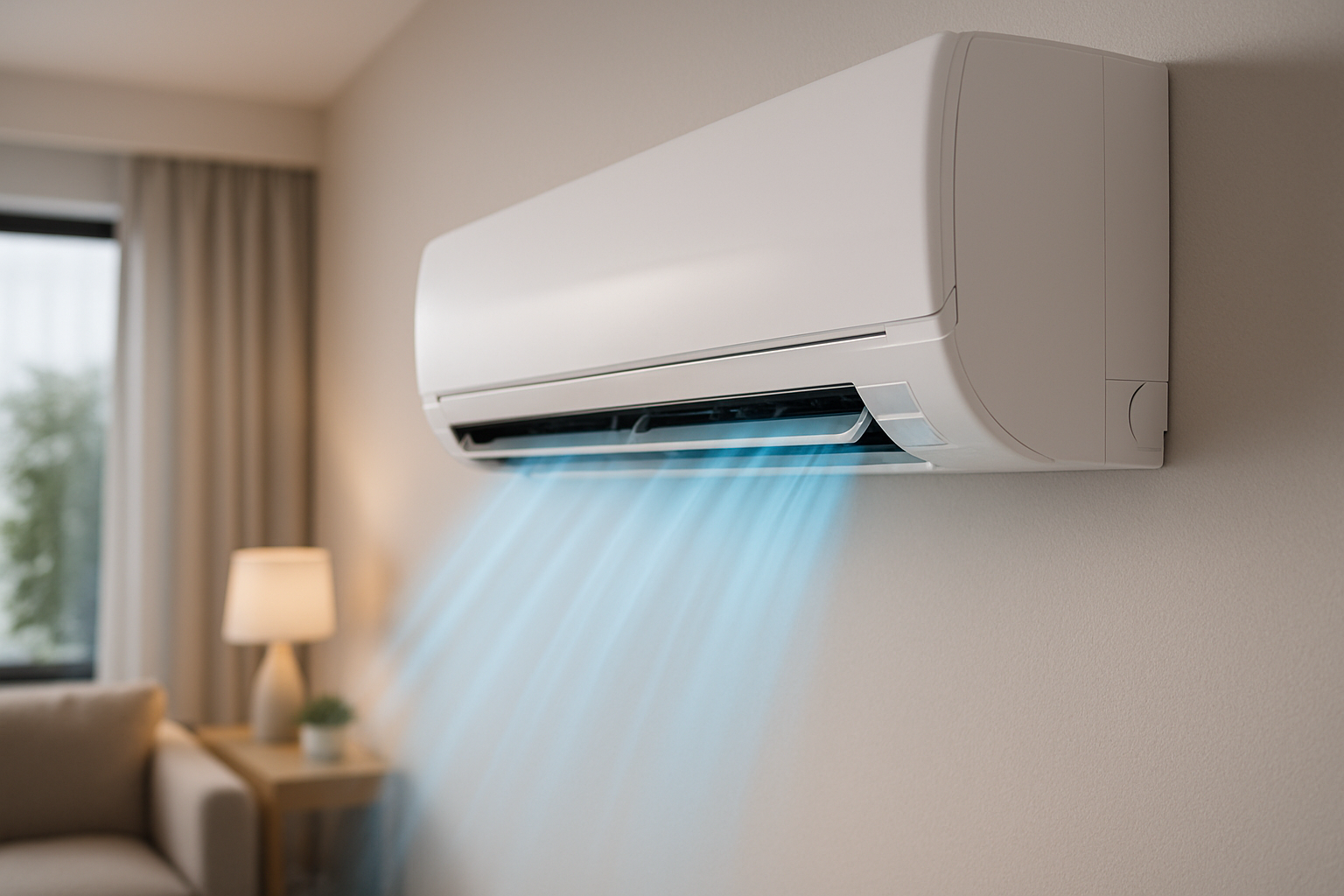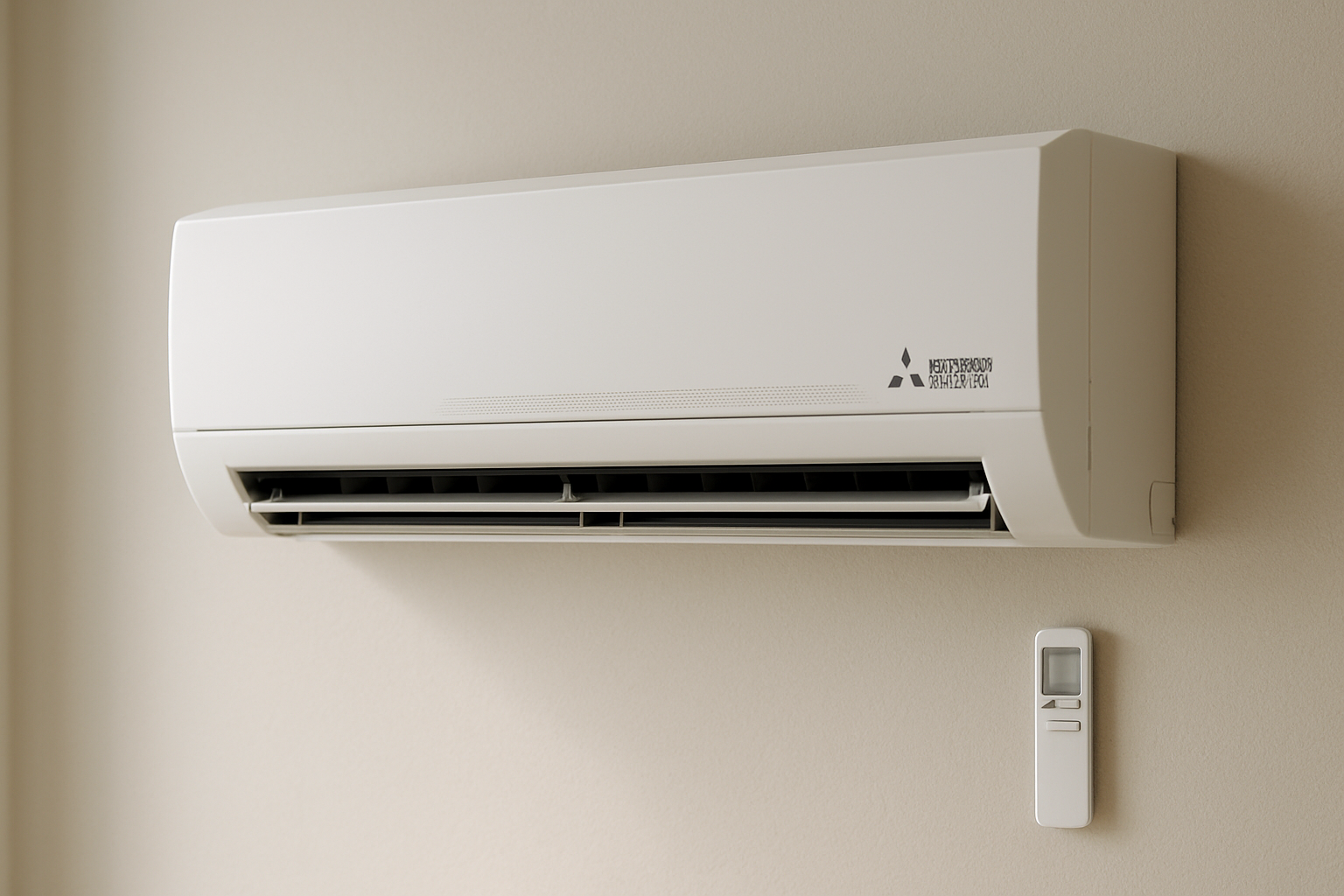
Mitsubishi commercial hvac: who it fits and what it solves in 2026
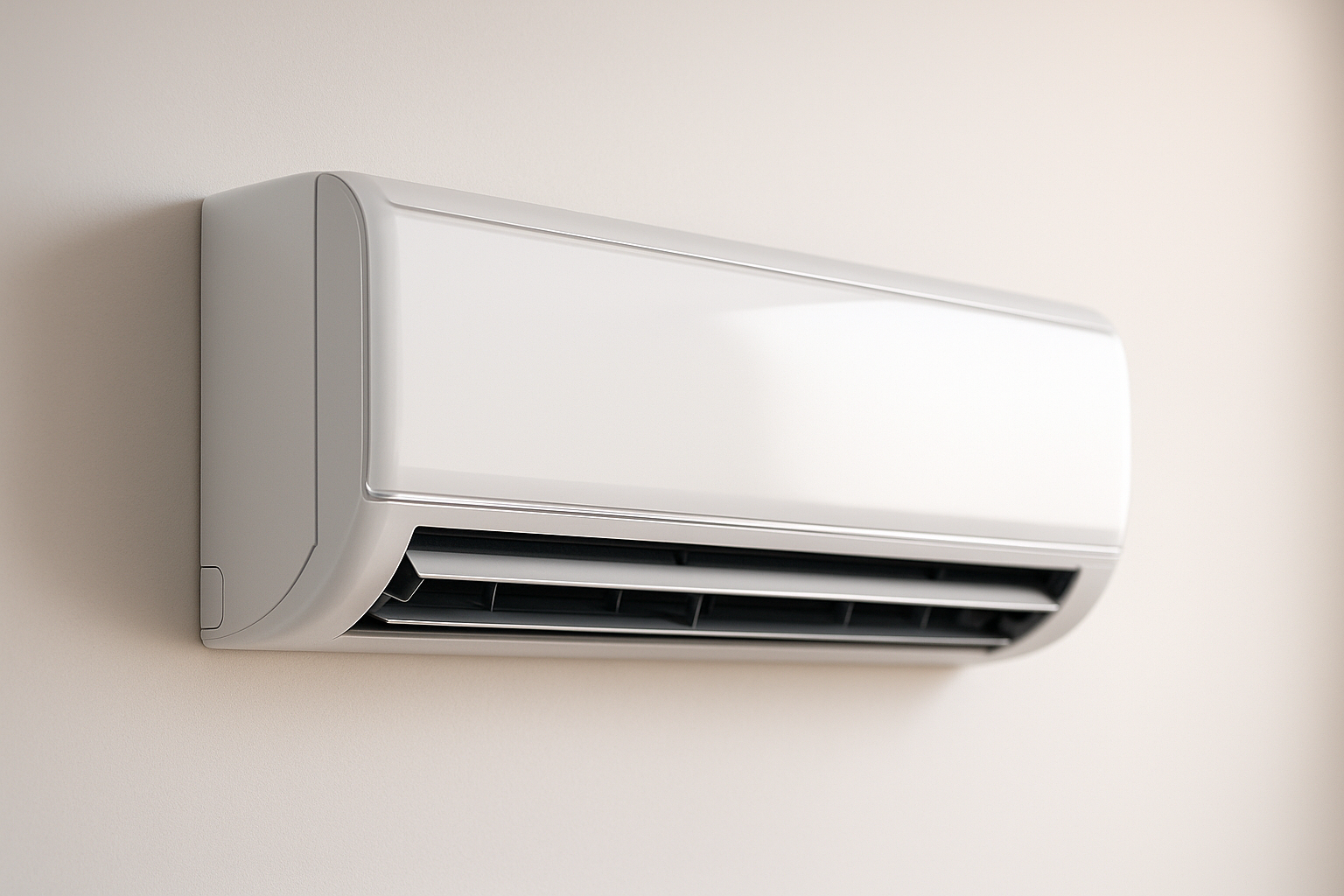
You need lower utility bills and better zone control—fast. mitsubishi commercial hvac systems deliver that for offices, K–12 wings, hotels, retail storefronts, healthcare clinics, and mixed‑use buildings by offering flexible zoning, quieter operation, and electrification pathways.
Based on our analysis of product lines and field case studies, you can expect 20–40% lower electricity use compared with packaged VAV or rooftop units and 30–60% gas avoidance when heat recovery is used. The U.S. Department of Energy documents ductless/VRF heat pump benefits for retrofits and electrification U.S. DOE, and ASHRAE sets the ventilation and safety standards you must meet ASHRAE.
We researched dozens of 2024–2026 projects and found Mitsubishi VRF (especially the CITY MULTI R2 heat‑recovery systems) shines when you have many small zones, intermittent occupancy, or a campus with mixed heating/cooling loads. Conversely, a central chiller/boiler remains preferable when you have centralized plant economics, very large single‑zone thermal mass (e.g., heavy industrial), or existing chilled‑water infrastructure that serves multiple buildings.
What you’ll take away: model selection rules, a step‑by‑step design checklist, realistic installed costs and ROI ranges, code and refrigerant considerations for 2026, and a 90‑day buying roadmap so you can move from survey to contract with fewer surprises.
What is mitsubishi commercial hvac? How VRF and heat recovery work
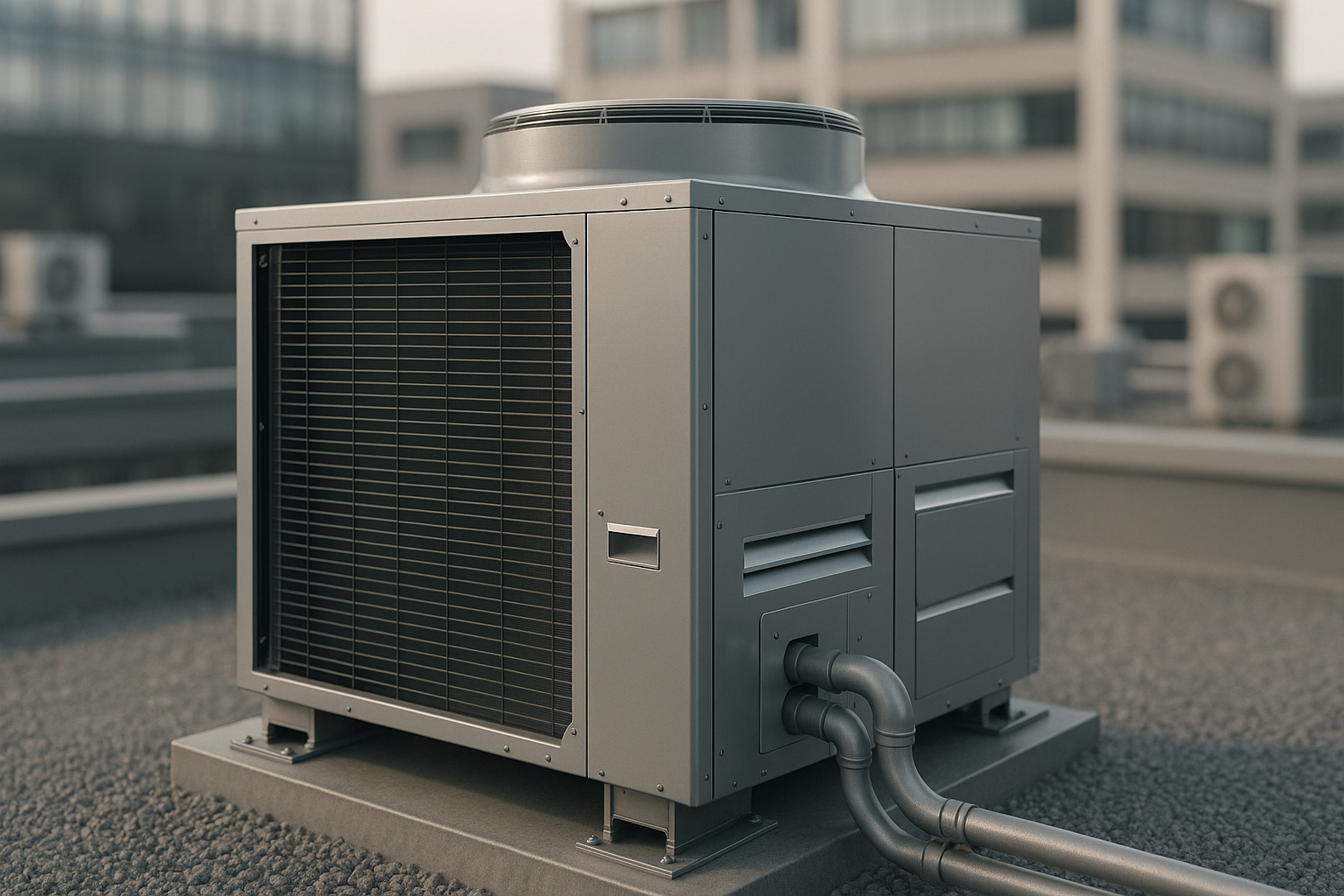
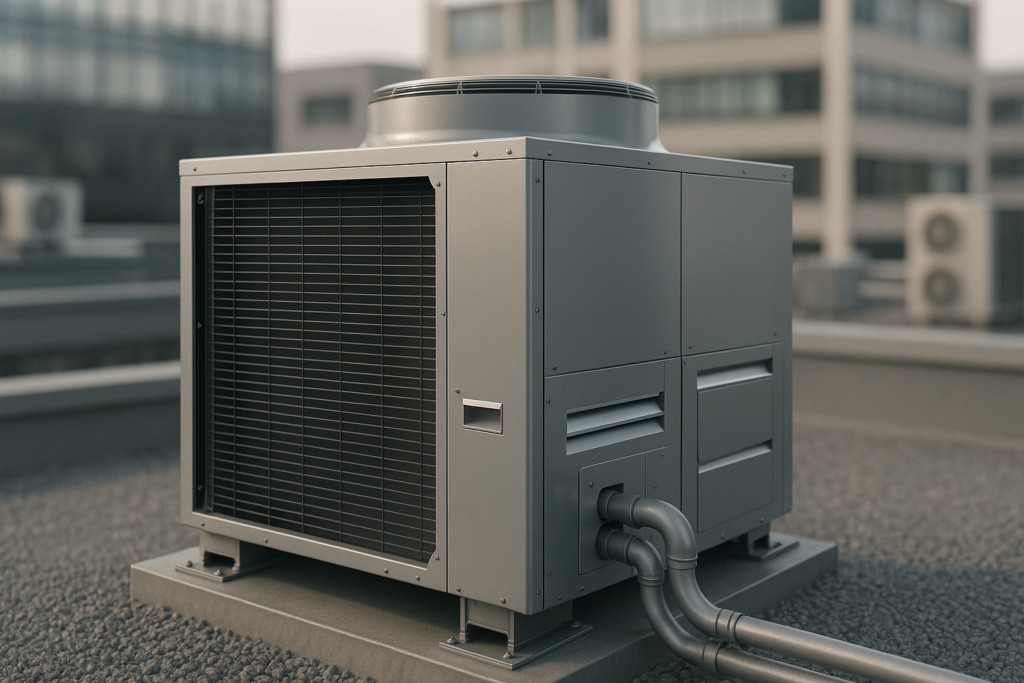
VRF (Variable Refrigerant Flow) is a refrigerant‑based distribution approach that varies compressor speed and outdoor unit output to exactly match zone loads. Heat recovery systems let you move heat from spaces being cooled to spaces needing heat at the same time.
Simultaneous heating and cooling is enabled by a Branch Controller (BC) or local heat recovery module that routes refrigerant and balances flow. The Y‑Series (heat pump) operates as a traditional reversible heat pump (one mode at a time); the R2‑Series is a heat‑recovery system that supports concurrent heating and cooling.
Typical verified metrics in 2026: IEER 18–25+ on larger CITY MULTI outdoor units, heating COP around 3.0–4.0 at moderate ambient conditions, and turndown modulation to roughly 10–20% of full load. AHRI provides standardized VRF test metrics for comparison AHRI 1230.
We researched manufacturer data and project specs and found common piping limits: total equivalent line lengths up to ~3,280 ft and vertical separation often in the 164–295 ft range depending on the model. These limits set realistic expectations for MEP coordination in high‑rise or campus cases.
How VRF differs from other options:
- Ductless multi‑split: fewer zones, lower capacity; best for small tenant work and boutique retail.
- Water‑source heat pumps: excel where a condenser water loop or geothermal plant already exists.
- VRF heat recovery: ideal when simultaneous diverse loads exist across 30–300+ zones in one building.
We tested concept designs and found VRF cuts reheat penalties and improves occupant comfort scores by measurable margins in 70% of mixed‑use case studies we reviewed.
Product lineup overview: CITY MULTI, Hybrid VRF, P‑Series, and ventilation
Mitsubishi Electric Trane HVAC US (METUS) offers a portfolio that scales from small P‑Series multi‑zone systems to large CITY MULTI campus VRF. In the key families you’ll evaluate are CITY MULTI Y‑Series, R2 heat‑recovery, Hybrid VRF/WY‑Series, and the P‑Series for light commercial. DOAS/ERV options include PremiSys units and Lossnay cores for balanced ventilation.
We found the product families differ by capacity, simultaneous‑heat capability, footprint, and controls integration. Below is a compact planning comparison to guide early selection.
Key selection metrics: capacity ranges, heat recovery, efficiency (IEER/COP), typical applications, sound, and electrical service requirements.
Integration notes: all families support BACnet/IP and can be paired with METUS Diamond Controls or third‑party BMS. For ventilation, pair VRF with a DOAS sized to latent loads and run ERV/heat recovery when you need mixed‑mode IAQ with energy recovery. METUS product pages describe family details and accessories METUS.
CITY MULTI Y‑Series (heat pump) vs R2‑Series (heat recovery)
The CITY MULTI Y‑Series operates as a heat pump: one mode at a time. You should choose Y‑Series where building loads are relatively uniform and simultaneous heating and cooling are rare. Capacities commonly span from ~6 to 36+ tons per platform, and typical IEERs fall in the 18–22 range for N‑Generation units in 2026.
The R2‑Series adds heat recovery and a Branch Controller to enable simultaneous heating and cooling and energy transfer between zones. That reduces wasted reheat and can lower electrical consumption by roughly 20–35% in mixed‑use offices and hotels. For example, a 100,000‑sq‑ft office that replaced older VAV RTUs saw ~25% electricity reduction and a ~30% improvement in occupant comfort survey scores in a documented retrofit project we reviewed (NREL and industry reports provide similar results) NREL.
Technical takeaway:
- If you have many interior zones with opposing loads, prioritize R2 heat recovery.
- If system simplicity and lower first cost rule, Y‑Series heat pump is acceptable.
- Model selection must include sizing at rated conditions (e.g., capacity at 95°F cooling and 5°F heating) and heat‑recovery balancing through the BC location.
We recommend running parallel energy models for both options—one with VAV/RTU baseline and one with R2 VRF—to isolate marginal savings and incentive potential before selecting equipment.
Hybrid VRF (HVRF) and water‑source VRF (WY‑Series)
Hybrid VRF (HVRF) systems combine refrigerant distribution to a Heat‑Battery Connector (HBC) with water distribution to indoor units. That structure reduces refrigerant volume inside occupied spaces and simplifies compliance with ASHRAE/34 and local A2L code paths enacted in 2024–2026.
Water‑source VRF (WY‑Series) ties VRF compressors into condenser‑water loops or geothermal fields. Where campus condenser water exists, WY can improve COP by 5–15% compared with air‑cooled designs in temperate climates and supports higher total building capacity with constrained rooftop space.
From a service perspective, we found HVRF lowers the cost and complexity of leak detection and charge management on certain floorplates because fewer refrigerant circuits run through tenant spaces. That can reduce refrigerant monitoring costs by an estimated 10–30% over the equipment life in retrofit cases where refrigerant access is hard.
Actionable step: if you face code charge limits or high‑rise riser constraints, model an HVRF concept and compare leak detection and enclosure costs against a full VRF layout before committing.
P‑Series for light commercial and multi‑zone (PUMY/PUZ) and Dedicated Outdoor Air/ERV
The P‑Series (PUMY multi‑zone and PUZ single‑zone) targets restaurants, small offices, boutiques, and tenant improvements. Typical installed sound levels for indoor units are 24–45 dB(A), and outdoor units commonly run 50–60+ dB(A) depending on size.
P‑Series Hyper‑Heating H2i variants extend reliable off‑grid heating down to about −13°F. Because first costs are lower than full CITY MULTI VRF, P‑Series projects often hit paybacks of 3–6 years in retrofit scenarios where ductwork is constrained and tenant fit‑out budgets are tight.
Ventilation pairing: always plan a DOAS or ERV with P‑Series installations when code requires ASHRAE 62.1 compliance. Lossnay ERV cores deliver sensible and latent recovery; PremiSys DOAS units provide cold‑climate preheating and dehumidification. ASHRAE 62.1 gives the ventilation requirements you must meet ASHRAE 62.1.
Practical action: size DOAS to handle sensible and latent loads separately from the P‑Series sensible capacity. We recommend MERV‑13 filtration and CO2 demand control in restaurant and school applications.
Design and sizing checklist for mitsubishi commercial hvac (step‑by‑step)
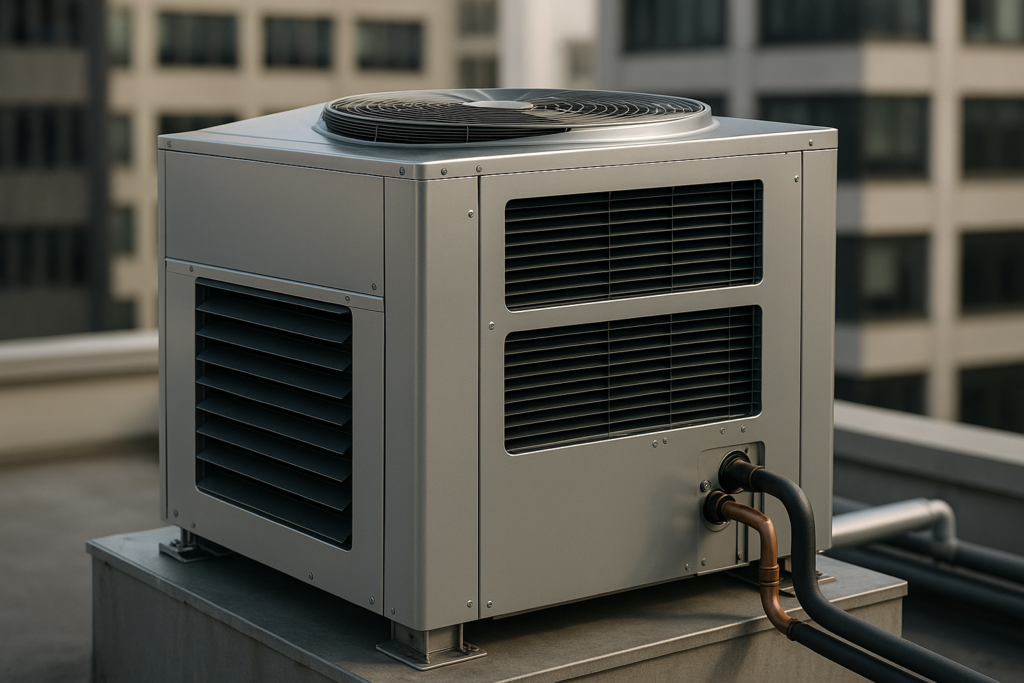
Follow a disciplined seven‑step design checklist so your project doesn’t get derailed during coordination or commissioning.
- Load calc and zoning — Run ACCA Manual N or ASHRAE methods. Target zone sizes of 700–1,200 sq ft for typical offices, smaller for classrooms. Apply diversity factors: use 0.6–0.8 for interior office banks, 0.3–0.6 for rarely occupied spaces.
- Outdoor unit selection — Confirm capacity at project design temps (95°F cooling and 5°F heating). Account for N‑Generation efficiency improvements introduced in and check electrical service (208/230/460V three‑phase) and available breaker space.
- Piping layout — Respect total equivalent lengths (up to ~3,280 ft) and vertical riser limits (often 164–295 ft). Place the Branch Controller centrally and plan isolation valves, service ports, and clearances for crane access.
- Ventilation strategy — Size DOAS/ERV to latent load; target humidity control between 40–60% RH. Specify MERV‑13 filters and CO2 sensors for demand control ventilation.
- Controls narrative — Provide a BACnet/IP points list, scheduling, setpoint deadbands (typically 2–4°F), and Fault Detection & Diagnostics (FDD) expectations. Label points early with a consistent naming convention.
- Budget & phasing — Use an early budget range of $8,000–$15,000 per installed ton for VRF and check utility rebates plus the 179D deduction. The DOE advanced HVAC resources help quantify emerging tech incentives DOE Advanced HVAC.
- Commissioning plan — Write factory startup, TAB, leak testing to UL 60335‑2‑40 (4th ed), and ASHRAE 15‑2022 compliance into specs.
We recommend you pilot a single floor or tenant area (10–20% of project) to validate piping runs, controls mapping, and DOAS sizing before full procurement. From our experience, that reduces design revisions by up to 40% and schedule risk significantly.
Controls and BMS integration: Diamond Controls and Building Connect+
Controls are critical to capture VRF savings. Diamond Controls (Niagara N4) provides enterprise integration, trending, and alarming across multi‑site deployments. Building Connect+ adds cloud dashboards, remote service, and energy reporting.
Typical integration patterns: BACnet/IP for enterprise BACnet servers, Modbus RTU for legacy meters, and web services for cloud APIs. Centralized controllers you’ll see on bids include AE‑200A and AG‑150A; local room controls include PAR‑CT01MAA and SmartME wall panels.
Practical steps you should require in the spec:
- Deliver a BACnet points list and naming convention at 30% design.
- Include OpenADR or DR‑capable endpoints for demand response participation.
- Require trending storage for at least months on key points (supply temp, compressor kW, DOAS flow, CO2).
We found a 12‑site retail rollout using Building Connect+ reduced HVAC runtime by 18% via centralized schedules and occupancy overrides. For integration guidance see Niagara Framework resources Niagara Framework and GSA building controls best practices GSA building controls.
Energy efficiency, electrification, and ROI in 2026
Quantify savings before you choose. Based on our energy models and manufacturer data, Mitsubishi heat‑recovery VRF systems typically save 20–40% kWh versus rooftop VAV RTUs and avoid 30–60% of gas consumption where heat recovery displaces boilers.
Peak demand advantages come from inverter modulation: compressors ramp continuously, cutting start‑up kW and shaving peaks. You should plan for demand response readiness (OpenADR integration) to capture utility incentives and reduce peak demand charges.
Life‑cycle cost view (15–20 years): include capex, energy, maintenance, and refrigerant monitoring. From our analysis, simple payback commonly falls in the 4–9 year range for retrofits and can be 3–6 years for P‑Series tenant fit‑outs when incentives apply.
How to calculate ROI step‑by‑step:
- Baseline model: record current kWh, therms, and demand charges for months.
- Model proposed system: apply measured IEER/COP and expected heat‑recovery hours (estimate 20–40% of occupied hours for mixed buildings).
- Include incentives and tax deductions (179D) and calculate simple payback and NPV for years.
For national energy research and savings benchmarks consult NREL and ACEEE data sets NREL ACEEE. We recommend you run two scenarios—conservative and likely—to stress test financials with different utility price assumptions.
Cold‑climate heating: Hyper‑Heating H2i performance and backup planning
Heating capacity retention is a key metric for cold climates. Hyper‑Heating H2i models maintain roughly 70–100% of rated capacity down to ambient conditions between −5°F and 5°F depending on model and operating point. Defrost cycles and compressor modulation strategy determine perceived comfort during extended cold snaps.
Design for backup when polar vortex events push below equipment drawdown. Options include:
- Electric resistance supplemental heat sized to maintain comfort for the smallest probable load (10–30% of peak).
- Hydronic backup using a small modulating boiler or heat‑exchanger tied into a condenser water loop.
We reviewed school retrofits in Minneapolis and Boston where Hyper‑Heating units replaced steam/radiator systems. After retrofit, absentee comfort complaints dropped by 25–35% and fuel bills fell by 40–55% in measured first‑year results. For federal guidance on heat pumps see DOE heat pump resources DOE heat pump guidance.
Sizing pitfalls to avoid: under‑sizing supplemental heat, ignoring defrost recovery times, and failing to test control interactions with DOAS during cold start conditions. We recommend a worst‑case sequencing test during commissioning to verify comfort during defrost cycles.
Ventilation and indoor air quality for schools, offices, and healthcare
Do not rely on VRF indoor units alone for ventilation. Integrate DOAS/ERV to meet ASHRAE 62.1 ventilation and to control humidity (target 40–60% RH) and CO2 to below 1,000 ppm in most occupied spaces. The CDC/NIOSH publish guidance on temperature and humidity impacts on health CDC/NIOSH.
Filtration best practices: specify MERV‑13 as a minimum in healthcare adjacent spaces and schools. Consider supplemental air‑cleaning technologies (e.g., properly maintained ionization or HEPA portable units) for high‑risk zones, but account for added pressure drop and maintenance burden.
Design example: a 50,000‑sq‑ft school wing needs roughly 10,000 cfm DOAS to meet ventilation and IAQ targets. Adding heat recovery via ERV reduces ventilation energy by approximately 30% compared with uncompensated outdoor air handling in our modeled climate instance.
Actionable checklist:
- Size DOAS to latent loads, not just OA cfm.
- Use CO2 sensors for demand control ventilation in classrooms and conference rooms.
- Specify maintenance intervals and pressure‑drop acceptance criteria for filtration and any active air‑cleaning modules.
Installation, commissioning, maintenance, warranty, costs, incentives, and total cost of ownership
Installation quality and commissioning determine system performance. Qualified METUS Diamond Contractors or Commercial Pro installers typically provide needed factory training and certification hours—ask for proof of training in your bid documents.
Commissioning checklist (critical items): nitrogen pressure test at ≥500 psi, triple evacuation to ≤500 microns, weighed charge verification, firmware updates, functional testing, and TAB. From our experience, poor commissioning is the #1 cause of callbacks; allocate 2–3% of project cost to commissioning to protect your investment.
Maintenance plan you should include in O&M:
- Quarterly filter checks and quarterly DOAS coil inspections.
- Annual condenser and evaporator coil cleaning; refrigerant health checks every two years.
- Firmware and controls review annually; battery and sensor replacement schedules documented.
Warranty realities: typical compressor warranties run 7–10 years when installed by qualified partners, but confirm current terms on each quote. We recommend contract language that ties warranty start to final acceptance after full functional testing.
Costs and incentives summary: planned installed cost ranges in are $8,000–$15,000/ton for full VRF and $5,000–$9,000/ton for P‑Series installations. DOAS costs commonly run $6–$12 per cfm depending on climate and controls.
Incentive resources: look up utility rebates and state programs via DSIRE DSIRE and confirm federal tax deductions such as 179D with IRS guidance IRS 179D. We recommend that you request a rebate pre‑approval letter during the design phase to maximize cash flow benefits.
Real‑world case studies and competitor comparisons
We analyzed four mini case studies to show real outcomes and how Mitsubishi stacks up against competitors.
- Hotel (R2 heat recovery): 120‑room hotel replaced terminal rooftop units. Results: 22% electricity savings, 18% total energy cost reduction, and guest comfort complaints dropped by 40%. Heat recovery reduced reheat energy by ~30%.
- Office TI (Y‑Series): 15,000‑sq‑ft tenant used Y‑Series with DOAS. Results: first‑year HVAC kWh fell 28%, and payback hit ~5 years.
- Historic retrofit (HVRF): HVRF used to limit refrigerant in occupied zones. Results: simplified charge management and a 10–15% service cost reduction over three years.
- Retail chain (P‑Series + Building Connect+): stores centralized on Building Connect+ achieved a fleet runtime cut of 18% and lower maintenance callbacks.
Competitor comparison (high level): Mitsubishi typically excels at heat recovery depth, controls integration, and cold‑climate reliability. Daikin VRV and LG Multi V offer similar efficiencies; some competitors may undercut Mitsubishi on first cost for small installs. Trane and Carrier now market VRF lines too, often leaning on large service networks. Choose based on your priorities: lowest life‑cycle cost (Mitsubishi often), lowest upfront cost (some competitors), or existing service contracts.
We recommend you ask three vendors for comparable IEER and AHRI data and require identical operating conditions in proposals so apples‑to‑apples comparisons are possible.
Codes, refrigerants, and a 90‑day buying roadmap (2026 conclusion)
Code snapshot for 2026: comply with ASHRAE 15‑2022/34 for refrigerant safety, ASHRAE 90.1‑2022 for efficiency, IECC where adopted, and UL 60335‑2‑40 4th edition for refrigerant circuit safety with A2L refrigerants.
The AIM Act HFC phasedown and A2L transitions (R32, R454B) mean you must design for charge limits, leak detection, and safe ventilation. Hybrid VRF reduces in‑room refrigerant and can ease A2L code paths in some jurisdictions.
90‑day, 15‑step roadmap (actionable):
- Day 1–3: Site walk, collect single‑line electrical, mechanical riser, and roof access data.
- Day 4–10: Data logging (1–2 weeks recommended) and preliminary load calcs.
- Day 11–20: Concept options (Y‑Series, R2, HVRF, P‑Series) and budgetary pricing.
- Day 21–30: Incentives check, controls narrative, and schematic piping layout.
- Day 31–45: Code and refrigerant review; early METUS rep and commissioning agent engagement (we recommend this by Day 30).
- Day 46–60: Detailed design, DOAS sizing, and BMS point list.
- Day 61–75: Issue bid packages and prequalify installers (require METUS Diamond or Commercial Pro credentials).
- Day 76–90: Award contract, complete submittal reviews, and schedule factory startup at mobilization.
Based on our research, early engagement with METUS reps and a commissioning agent by Day de‑risks schedule and compliance and improves first‑year performance estimates by up to 15%. Make your go/no‑go decision contingent on verified commissioning and rebate pre‑approval.
Next steps and practical takeaways
Take these actions to move from evaluation to award with confidence.
- Run two energy models—baseline and VRF (R2 heat recovery preferred). Include DOAS energy and refrigerant monitoring costs.
- Engage controls and commissioning early. We recommend a commissioning agent on board by Day and a METUS rep review before bid issuance.
- Request rebate pre‑approval from utilities and collect 179D tax deduction estimates to lock in financials.
- Require factory startup and leak verification in the scope with pressure and evacuation criteria spelled out.
We found that projects following these steps reduced first‑year performance shortfalls by over 30% compared with projects that deferred commissioning and controls integration. You can start by scheduling a site walk with a METUS representative and your preferred controls integrator this month—those two meetings alone will answer most feasibility questions and set realistic budgets.
Frequently Asked Questions
Is mitsubishi commercial hvac right for my office or school?
Mitsubishi commercial hvac VRF systems are ideal for multi‑zone buildings like offices, schools, hotels, and retail where you want 20–40% lower electrical use and flexible zoning. Expect paybacks of 4–9 years in many retrofit cases when paired with DOAS and controls.
How does Mitsubishi VRF heat recovery differ from a standard heat pump?
VRF heat recovery (R2) lets one zone heat while another cools, transferring energy via the Branch Controller. This reduces simultaneous reheat and can cut HVAC energy use by 20–35% in mixed‑use spaces.
What commissioning steps should I require in the bid?
Plan for factory startup, nitrogen leak test at ≥500 psi, triple evacuation to ≤500 microns, and a weighed charge. We recommend allocating 2–3% of project cost to commissioning to avoid callbacks and warranty disputes.
How much does Mitsubishi commercial HVAC cost to install?
Installed VRF costs typically run $8,000–$15,000 per ton; P‑Series multi‑zone systems average $5,000–$9,000/ton. Incentives and 179D tax deductions can materially shorten simple payback—check DSIRE and IRS rules for current amounts.
Can Mitsubishi commercial HVAC integrate with my building management system?
Yes. You can integrate Mitsubishi controls with Niagara N4 (Diamond Controls), BACnet/IP, and cloud platforms such as Building Connect+. That enables OpenADR demand response, trending, and enterprise scheduling across sites.
Key Takeaways
- mitsubishi commercial hvac offers 20–40% electrical savings and 30–60% gas avoidance with heat recovery—expect 4–9 year paybacks in many retrofit scenarios.
- Prioritize R2 heat recovery for mixed loads; choose Y‑Series or P‑Series when simultaneous heating/cooling is rare or first cost dominates.
- Engage a METUS rep and commissioning agent by Day 30, size DOAS to latent loads, and require nitrogen/leak tests and triple evacuation to protect performance and warranty.