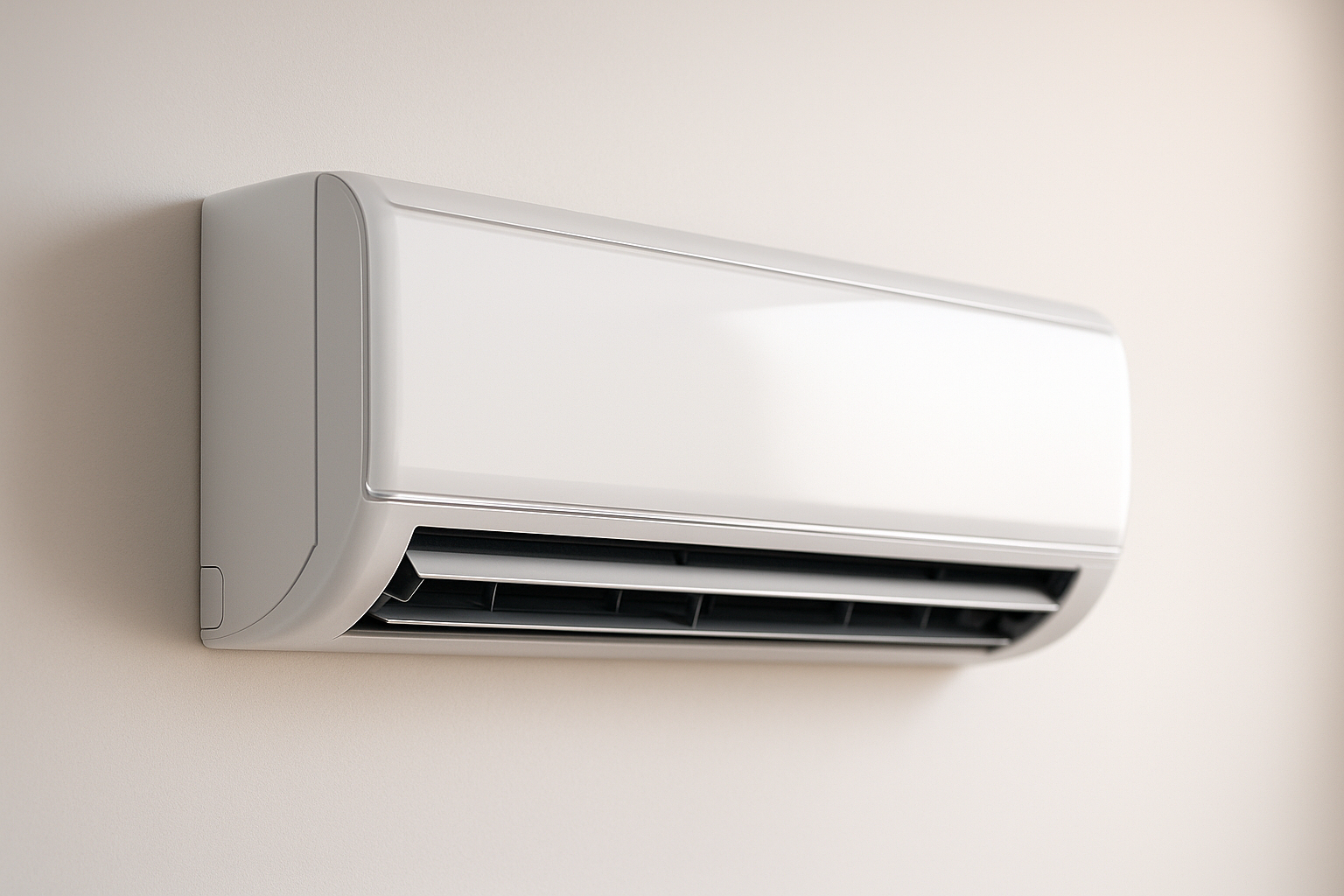
? Want to know how to pick the most efficient window air conditioner so you save on energy bills without sacrificing comfort?
Choosing the most efficient air conditioner window unit for energy savings
You’ll save money and reduce your environmental footprint when you choose the right window air conditioner. This guide walks you through how window units work, the key efficiency metrics, sizing, installation and maintenance tips, and practical calculations so you can select a unit that gives you the best comfort per watt.
Why efficiency matters for a window air conditioner
You’ll likely run a window unit for many hours during hot periods, and small differences in efficiency add up quickly over a season. A more efficient unit uses fewer watts to produce the same cooling, reducing your electricity bill and extending the unit’s effective value. Efficiency also reduces the heat rejected to the outside and the demand on your building’s electrical system.

How window air conditioners work
You’ll find that window ACs are compact refrigeration systems. They cycle refrigerant through an evaporator (inside) and a condenser (outside) with a compressor in between. The evaporator absorbs heat from the room air, and the condenser releases that heat outside. Fans move air across both coils to maintain airflow. The compressor and fan motors are the largest energy consumers, so advances that reduce their power draw (variable speed motors, inverter technology) boost overall efficiency.
Key components and what they do
You’ll typically see:
- Compressor: pumps refrigerant; most energy used here.
- Evaporator coil: cools indoor air.
- Condenser coil: releases heat outdoors.
- Fans: circulate indoor and outdoor air.
- Thermostat & controls: cycle operation to maintain set temperatures.
Understanding these helps you evaluate features that improve efficiency.
Key efficiency metrics and what they mean
You’ll want to compare units by consistent metrics. The most common are EER and CEER for window units; SEER is used more for central systems. EnerGuide labels and Energy Star also help.
EER (Energy Efficiency Ratio)
EER = BTU per hour divided by Watts input at a fixed condition (usually 95°F outdoor). The higher the EER, the more cooling per watt. EER is useful for comparing steady-state efficiency.
CEER (Combined Energy Efficiency Ratio)
CEER accounts for both active cooling performance and standby/off-cycle energy use. CEER is becoming more common on modern window unit labels; higher CEER means less wasted energy when the unit is not actively cooling.
SEER (Seasonal Energy Efficiency Ratio)
SEER measures seasonal performance for central systems using variable outdoor temperatures; it is less commonly used for window units but may appear in marketing materials.
ENERGY STAR certification
If a window unit is ENERGY STAR certified, the manufacturer has met efficiency thresholds that exceed minimum federal standards. ENERGY STAR models typically have higher EER/CEER.
Quick reference table of metrics
| Metric | What it measures | How you use it |
|---|---|---|
| EER | Cooling (BTU/h) ÷ Power (W) at steady-state | Compare instantaneous efficiency across models |
| CEER | Adjusted efficiency including standby use | Best single number for modern window units |
| SEER | Seasonal efficiency for variable outdoor temps | Less relevant for single-room window units |
| ENERGY STAR | Certification based on efficiency thresholds | Quick sign that a model is above standard efficiency |
You’ll use EER or CEER as the most important spec when shopping.

How to choose the right size (BTU) for your room
Buying the correct BTU rating is essential. Too small, and the unit runs constantly without reaching setpoint. Too large, and the unit cycles on and off too frequently, wasting energy and reducing dehumidification.
Room size to BTU guideline
This table gives a general starting point. Adjust up or down based on ceiling height, sun exposure, and room activity.
| Room size (sq ft) | Typical BTU/h |
|---|---|
| Up to 150 | 5,000–6,000 |
| 150–250 | 6,000–8,000 |
| 250–350 | 8,000–10,000 |
| 350–450 | 10,000–12,000 |
| 450–550 | 12,000–14,000 |
| 550–700 | 14,000–18,000 |
Factors that change your BTU needs
You’ll want to adjust the table above based on:
- Sun exposure: add 10–20% for very sunny rooms.
- Ceiling height: add capacity for ceilings above 8 ft.
- Occupancy and appliances: add 600 BTU per additional person if room is often full, and add for equipment that generates heat.
- Insulation and windows: well-insulated, shaded rooms may need less.
Why selecting the right EER/CEER matters for operating cost
You’ll save energy by choosing a higher EER/CEER. The difference in electrical draw can be calculated directly:
- Watts = BTU/h ÷ EER
- kWh per hour = Watts ÷ 1000
- Energy cost per hour = kWh per hour × cost per kWh
Example calculations
Assume:
-
Room needs 10,000 BTU/h
-
Electricity cost = $0.15/kWh
-
Compare unit A with EER 9 and unit B with EER 12
-
Unit A watts = 10,000 ÷ 9 ≈ 1,111 W → 1.111 kWh → cost/hr = $0.1667
-
Unit B watts = 10,000 ÷ 12 ≈ 833 W → 0.833 kWh → cost/hr = $0.1250
-
Savings = $0.0417/hr
If you run the unit 8 hours/day for 120 days:
- Unit A annual cost ≈ $0.1667 × 8 × 120 = $160
- Unit B annual cost ≈ $0.1250 × 8 × 120 = $120
- Annual savings ≈ $40
That savings compounds across multiple years and heavier use.
Table: Energy cost examples
| BTU | EER | Watts | kWh/hr | Cost/hr ($0.15/kWh) | Cost/day (8 hr) | Cost/season (120 days) |
|---|---|---|---|---|---|---|
| 10,000 | 9 | 1,111 | 1.111 | 0.167 | 1.33 | 159.96 |
| 10,000 | 12 | 833 | 0.833 | 0.125 | 1.00 | 120.00 |
| 12,000 | 10 | 1,200 | 1.200 | 0.180 | 1.44 | 172.80 |
| 12,000 | 13 | 923 | 0.923 | 0.139 | 1.11 | 133.32 |
You’ll see that even modest EER improvements reduce seasonal costs noticeably.

Features that improve efficiency
When you shop, you’ll want to look beyond BTU and EER to the features that cut real-world energy use.
Inverter compressors (variable speed)
You’ll get significant efficiency gains with inverter technology because the compressor modulates to match cooling demand. This avoids energy-wasting on/off cycles and improves comfort and humidity control. Inverter window units tend to cost more upfront but save more over time.
Variable-speed fans and multi-speed compressors
You’ll get finer control over airflow and less power draw when full speed isn’t necessary. Smooth modulation reduces noise and increases comfort.
Programmable thermostats and timers
You’ll reduce runtime by scheduling the unit to run only when needed. Some units let you set different temperatures at different times of day, which cuts energy use.
Smart controls and Wi-Fi
You’ll be able to control your unit remotely, set schedules, and integrate with smart home systems. Smart features can help you avoid running the unit when no one’s home.
Energy saver / eco mode
These modes cycle the fan and compressor more intelligently and can reduce power draw during marginal cooling needs.
Dehumidification modes
You’ll maintain comfort at higher temperatures with dehumidification, allowing you to run the thermostat a few degrees higher and save energy while staying comfortable.
Improved coils and refrigerant types
You’ll want units with efficient heat-exchange coil designs and modern refrigerants that support better heat transfer and efficiency.
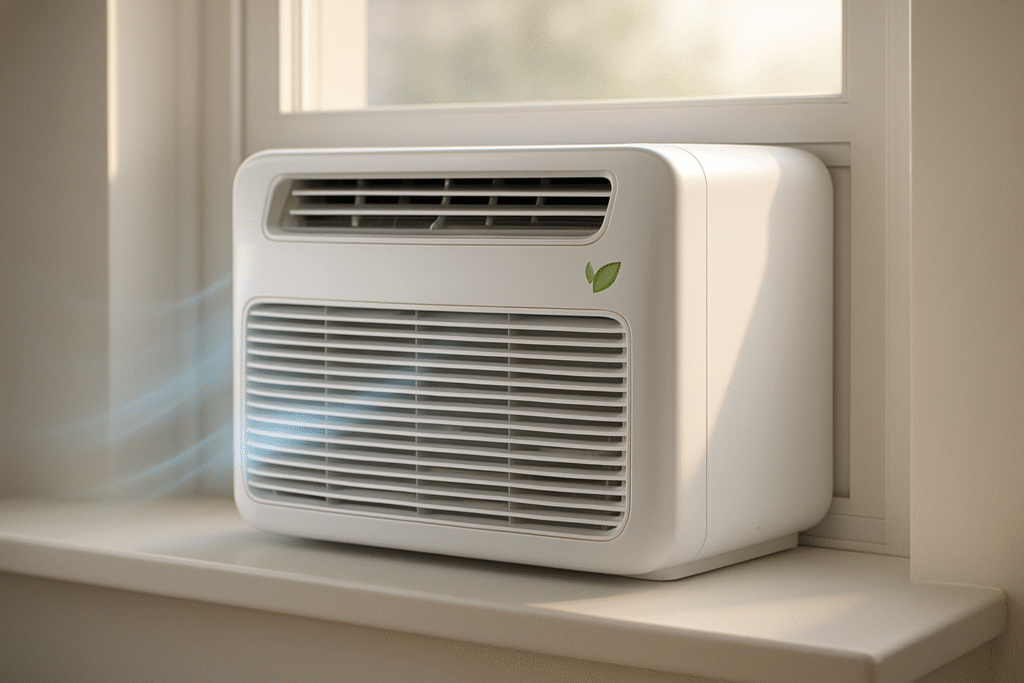
Installation and placement tips to maximize efficiency
A properly installed unit performs far better than one that’s poorly installed.
Choose a shaded location for the window
If possible, place the unit where it receives less direct sun on the outside portion. You’ll reduce the outdoor coil’s heat load and improve efficiency.
Seal gaps and insulate around the unit
You’ll prevent hot outdoor air infiltration by weatherstripping the sides and top and sealing gaps with foam or caulk. Preventing drafts makes your unit’s job easier.
Maintain a slight tilt for drainage
You’ll ensure condensate drains properly by tilting the unit slightly toward the outside (manufacturer will specify degree). Poor drainage can reduce performance and cause water issues.
Ensure adequate airflow outside
You’ll need unobstructed air movement around the outdoor side. Avoid heavy curtains, bushes, or other obstructions that restrict airflow.
Use proper support and follow manufacturer guidelines
You’ll avoid damage by installing with brackets or support as required; a tilted or unstable unit can cause inefficiency or leaks.
Maintenance practices that preserve efficiency
Routine maintenance preserves efficiency and can extend your unit’s life.
Clean or replace filters regularly
You’ll reduce airflow restrictions by washing or replacing filters every 1–3 months depending on use and dust levels.
Clean the coils and fins
You’ll keep heat exchange efficient by removing dust and debris from the evaporator and condenser coils. Use a soft brush, coil cleaner, and be gentle on fins.
Check drain channels and condensate paths
You’ll prevent standing water and mold by ensuring drains are clear.
Inspect door/window seals and insulation
You’ll avoid energy loss by keeping the installation airtight.
Professional servicing
You’ll want a qualified technician to inspect refrigerant levels and electrical components once a year or if you notice reduced cooling performance.
Noise and comfort considerations
You’ll want to consider noise because units with more efficient technologies (inverter, variable speed) often run quieter. Manufacturers usually list decibels (dB); compare models if noise matters to you. Also consider airflow patterns and louvers for directing cool air where you need it most.
Cost vs savings: understanding payback
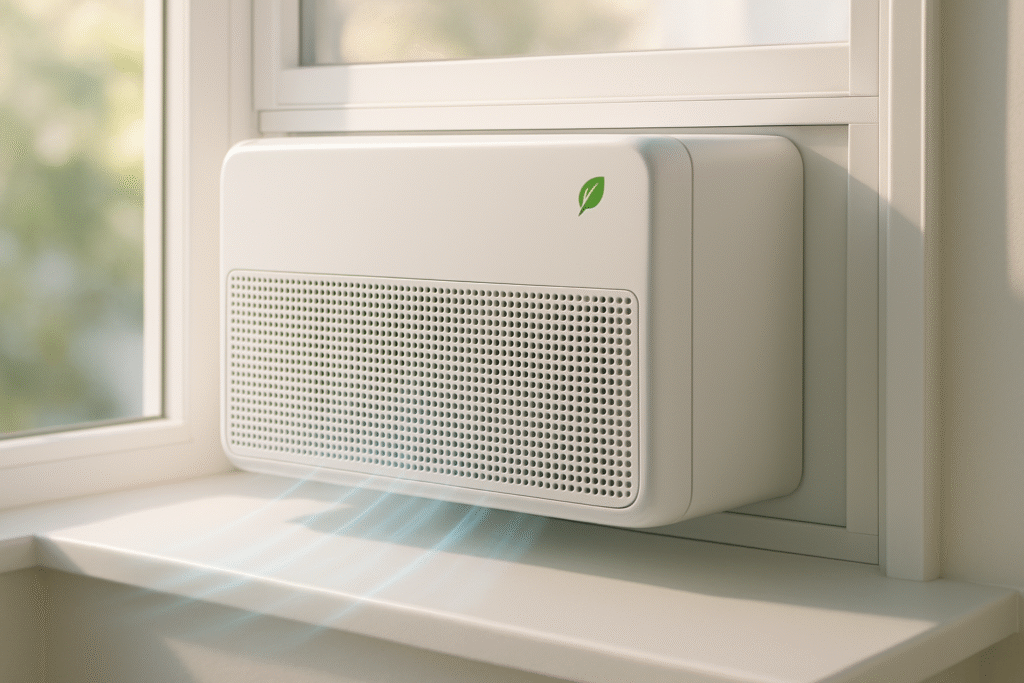
You’ll need to balance upfront cost against operating savings. A higher-efficiency unit typically costs more initially but reduces your bills.
Example payback scenario
- Standard unit price: $250, EER 9
- Efficient unit price: $350, EER 12
- Annual savings (as shown earlier): ≈ $40
- Extra cost: $100
- Payback ≈ $100 ÷ $40 = 2.5 years
This is a simplified example—your actual payback depends on hours used, electricity price, and local climate.
Table: Simple payback illustration
| Upfront extra cost | Annual savings | Payback (yrs) |
|---|---|---|
| $50 | $20 | 2.5 |
| $100 | $40 | 2.5 |
| $200 | $40 | 5.0 |
| $150 | $60 | 2.5 |
You’ll see that heavier use (more hours) shortens payback.
A buyer’s checklist: what you should compare
Use this checklist to evaluate models side-by-side.
| Item | Why it matters |
|---|---|
| BTU rating | Matches cooling capacity to room size |
| EER or CEER | Instant efficiency measure |
| Inverter/variable speed | More efficient and comfortable |
| ENERGY STAR | Indicates higher-than-standard efficiency |
| Noise (dB) | Comfort in bedrooms/living areas |
| Installation kit included | Saves cost and simplifies install |
| Weight & dimensions | Fits your window and support |
| Warranty length & terms | Protects your investment |
| Smart features | Convenience and potential energy savings |
| Dehumidification/Bedding features | Comfort and less runtime |
You’ll use this checklist when comparing models in a store or online.
Common mistakes to avoid
You’ll save frustration and money if you avoid these pitfalls.
- Buying a unit that’s too large thinking bigger is always better.
- Ignoring EER/CEER and focusing only on BTU.
- Installing without sealing gaps or insulating around the unit.
- Failing to clean filters and coils regularly.
- Not checking that the unit’s electrical draw matches your outlet/circuit.
- Replacing a unit without evaluating whether a mini-split or central upgrade would be more efficient for your situation.
How to compare models in the store or online
You’ll want to gather spec sheets and compare the key numbers side-by-side.
Steps:
- Record BTU, EER, CEER, and decimal values for Watts if listed.
- Check ENERGY STAR and look for inverter/variable speed labels.
- Note noise level and dimensions; verify installation kit included.
- Calculate estimated operating cost using the formula shown earlier for your usage scenario.
- Read warranties and user reviews focusing on reliability and performance.
When to consider an alternative to a window unit
Window units are great for single rooms or rentals, but there are cases where alternatives are better.
- You’ll consider a ductless mini-split if you want higher efficiency, quieter operation, and better aesthetics for longer-term installations across multiple rooms.
- Central AC makes sense for whole-home cooling where ductwork already exists.
- Portable ACs are less efficient and are typically a last resort; fans and whole-room strategies might be better.
Environmental and smart usage tips
You’ll want to take small actions that multiply:
- Set thermostat a few degrees higher and rely on fans to maintain comfort.
- Use curtains, shades, or reflective film to reduce solar load.
- Use programmable or smart scheduling to avoid cooling empty rooms.
- Combine with ceiling fans (which use far less power) to increase perceived comfort.
Troubleshooting common efficiency problems
If your unit is running more than expected or cooling poorly, you’ll want to check:
- Dirty filters or coils slowing airflow.
- Refrigerant leaks causing reduced cooling capacity (professional service needed).
- Air leaks around the unit allowing warm air infiltration.
- Fan or compressor issues; listen for unusual noises.
- Improper thermostat placement (e.g., near a direct draft or heat source).
How to read the label and manufacturer specs
You’ll find important information on the product label or manual:
- BTU/h rating
- EER or CEER value
- Watts or amps and voltage
- Noise level in dB
- Energy Star or other certifications Read manufacturers’ installation instructions for tilt, framing, and clearances.
Warranty, reliability, and service
You’ll want at least a 1-year parts and labor warranty and check whether compressor warranties are longer. Consider the manufacturer’s reputation for spare parts and availability of service if something goes wrong.
Final recommendations and actionable steps
You’ll get the most efficient and cost-effective results if you follow a clear process:
- Measure your room and use the BTU table to choose a capacity that fits.
- Set a budget but be open to paying more upfront for higher EER/CEER or inverter technology if you run the unit many hours.
- Compare EER/CEER, Energy Star status, noise, and features using the buyer’s checklist.
- Calculate estimated operating cost using the formulas above for your local electricity price and expected daily runtime.
- Install properly—seal gaps, ensure airflow, and follow tilt/support recommendations.
- Maintain regularly: clean filters, clear coils, check drainage, and service annually.
- Use smart scheduling, thermostats, and fans to reduce runtime and increase comfort.
If you follow these steps, you’ll choose a window AC that keeps your space comfortable while minimizing energy use and cost.
Quick reference tables
Room size to BTU (summary)
| Room size (sq ft) | Suggested BTU |
|---|---|
| Up to 150 | 5,000–6,000 |
| 150–250 | 6,000–8,000 |
| 250–350 | 8,000–10,000 |
| 350–450 | 10,000–12,000 |
| 450–550 | 12,000–14,000 |
| 550–700 | 14,000–18,000 |
Efficiency and cost quick-calculator (formula recap)
- Watts = BTU ÷ EER
- kWh/hr = Watts ÷ 1000
- Cost/hr = kWh/hr × cost per kWh
Use these to estimate daily and seasonal costs for comparison shopping.
You’re now equipped with the practical knowledge to choose the most efficient window air conditioner for energy savings. Follow the sizing guide, focus on EER/CEER and inverter technology, seal and maintain the installation, and you’ll enjoy lower bills and better comfort.